The agents start speaking.
From infrastructure to characters: this week autonomy promises encounter concrete rules.
Interfaces alone no longer explain this week’s tokens. Agency funds personalities, Hooked sets behaviours and Socket plugs rules into a pool. Projects describe what their code should allow; users respond with questions, requests and sometimes incidents.
We retain published stories and add the maximums selected for the weekly ranking. New dossiers follow contracts into their sources, including when the story remains thinner than its name. The final ranking records observed amplitudes; the preceding pages explore what surrounds them.
 Written by Jérôme L.
Agency: trading fees give tokens a mind

On Solana, Agency promises coins that can observe, create and act using their own treasuries. Following its first night of trading posts and user feedback, its reported ATH now reaches $22.38M on October 4 at 06:10:15 Paris time.
At 00:41, a coin receives a “mind”
On October 2 at 00:41:44 Paris time, @tryagency posts a lengthy announcement: on AGENCY, a token receives an AI model, a treasury and a range of possible actions. The message ends with 7VertkgF9KLhxxJXHX6uaWuoYZTP9LdGj2bWmVXVpump. This is therefore more than a name resembling an application: the project’s account explicitly connects its pitch to this Solana contract. [1]
The market appears almost simultaneously. DEX Screener dates the Pump.fun pair to October 2 at 00:39:44 and the PumpSwap pair to 00:42:35. These times locate the tracked markets without establishing when the software was conceived. Agency’s first reported peak, a $2.10 million market cap at 06:50 that day, comes during the first night in which a technical proposition also becomes a trading narrative. [11]
Agency, or the capacity to do something
The word agency describes a capacity to act. The project uses it to shift a familiar AI memecoin story: instead of placing a token beside a chatbot, it proposes giving decisions to the token itself. A launcher selects a model, a personality and an objective. The FAQ then describes the latter two as flavour rather than instructions the system must obey. Claimed autonomy becomes the subject. [1] [4]
The presentation invites people to imagine a coin observing its market, making its own images, rewarding holders or buying back tokens. It brings together tasks usually attributed to a team: monitoring numbers, sustaining a story, organising a community and deciding how funds are used. Our reading is that the narrative replaces an ever-present developer with an entity whose successive initiatives people could watch. [2]
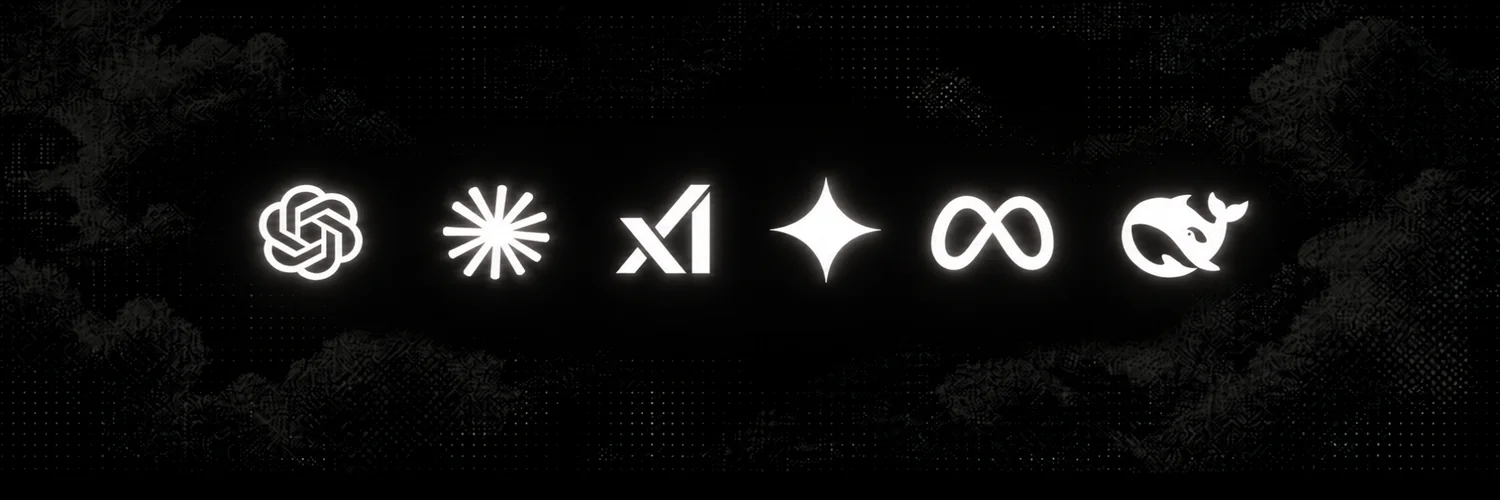
The artwork makes that proposition legible. The square logo shows a small beige pixelated computer monitor displaying several symbols associated with AI models. The banner lines up white emblems against a textured black background. Rather than choosing an animal mascot, the brand displays a choice of brains. Those logos are part of its graphic presentation; they do not establish partnerships with the companies represented. [2] [11]
Fees become thinking time
The announced mechanism gives the metaphor an economic foundation. The documentation says creator fees from coins launched through Agency go to the platform and are accounted separately for each coin. The first $20 fund model credits; up to $100, the allocation is split between credits and the coin’s treasury. Beyond that threshold, 70% goes to its own treasury, 15% to credits and 15% to the platform. [3]
This connects market activity to the agent’s continuity. The documentation says it wakes at $20, then stops if its coin generates less than 0.1 SOL in fees over an hour. It resumes when that activity returns. The token’s “life” is thus a funding rule rather than a magical property of its contract: fewer trades can mean less computation and fewer actions. [3]
Agency, the token discussed here, must also be distinguished from the coins the site lets people launch. The presentation describes a platform and its agents’ accounts; the pages reviewed do not establish that holders of the Agency contract directly receive the 15% allocated to the platform. A launchpad growth story and an economic entitlement attached to its token are separate questions.
During the night, traders start telling an ecosystem story
At 04:17:25, Juub, @JuubCooks, says he bought an Agency dip and includes the exact contract. His assessment focuses on the launchpad and its ability to give coins minds. Four minutes later, he develops a thesis about shoggoth, a platform coin with a different address. He imagines it could exceed the launchpad’s value if Agency settles at a high level. This is his trading projection rather than an established outcome. [6]
That step broadens the conversation. Agency is no longer assessed solely as an isolated asset: someone starts describing the creations that might exist around it. Distinguishing contracts becomes essential. Juub’s shoggoth is 6d82cCtC1LktWWgjUz5h3vMenFj5EDHLMBFvcpmvrRi; it is neither Agency nor another token of the same name to which the same history could automatically be assigned. [6] [10]
At 06:42:28, Cross 0ver, @Cross0verX, also says he bought Agency and provides its address. This post precedes the first reported October 2 peak by several minutes. Its timing records continued attention during that period; it does not prove the declared purchase caused the ATH. [7]
A console gives the story concrete scenes
The shoggoth page shows what participants can follow. When reviewed after Agency’s initial peak, it displays a decision console, visual creations, narrative writing and several programmes: meme contests, rewards conditional on holding duration, and buyback-and-burn rules. The appeal extends beyond reading a promise of capabilities to watching a personality and a market respond to each other within one interface. [10]
One example also exposes the limits of this presentation. The console describes a threshold reward that remained stuck, followed by a proposed replacement jackpot. In the moves list, another programme is marked as blocked by a safety check. These are states displayed by the platform, not an independent audit of the entire execution chain. They nevertheless show a public story containing uncertainty, refusals and retries rather than only successful announcements. [10]
The security documentation describes an agent proposing actions without holding keys, with spending controls and a separate signer. This is the project’s technical assertion. It provides a useful distinction for understanding its vocabulary: the AI selects a proposal, while the system retains the decision to authorise execution. [5]
A peak, a cap and a contest over the narrative
At 06:42:16, Agency replies to 9to5Jim, @yermjim, who asks it to post more amid competition. The project contrasts a readily reproducible surface with the underlying system it says it has built. The sources reviewed do not establish that its software was copied; the exchange primarily records pressure to make its work visible and defend its difference. [8]
That difference also depends on day-to-day operation. In a reply to @insid4rk displayed at 06:37, a team member acknowledges a safety-cap issue affecting some coins. At 07:33:35, the account announces a fix. The correction follows the first reported $2.10 million market-cap peak on October 2 at 06:50: it belongs to the next stage of the story rather than a retrospective explanation of the peak. [9]
Agency has found its subject in a concrete tension: letting a coin act while building what prevents it from acting without restraint. Early posts turned that proposition into an ecosystem narrative; consoles and incidents now give participants things to observe. What happens next will depend on what these agents continue to produce when the initial announcement is no longer enough to hold attention.
Updated record: Agency subsequently reached a market-cap ATH of $22,380,563 on October 4, 2026 at 06:10:15 Paris time, according to the peak supplied by the editorial team. This new maximum extends its trajectory beyond the first night described here; the October 2 exchanges document the launch without, by themselves, establishing the causes of the later peak.
This week’s reference
The weekly selection supplied to the editorial team retains $70,314 at the signal and $29,141,368 at the maximum, or 414.45x, for this contract. This maximum supplements the dated references above; the ranking supplies no new timestamp for it. It is an observed market-cap amplitude, not a return realised by every holder.
Written by Jérôme L.
HOOKED: a fishhook in the rules of the market

On Solana, Hooked turns trading conditions into rules embedded in tokens. Stock-market hours, sell caps, fixes and buybacks shape a launchpad story whose supplied ATH reaches $11.91M on October 2, 2026 at 20:03 Paris time.
A fishhook instead of a mascot
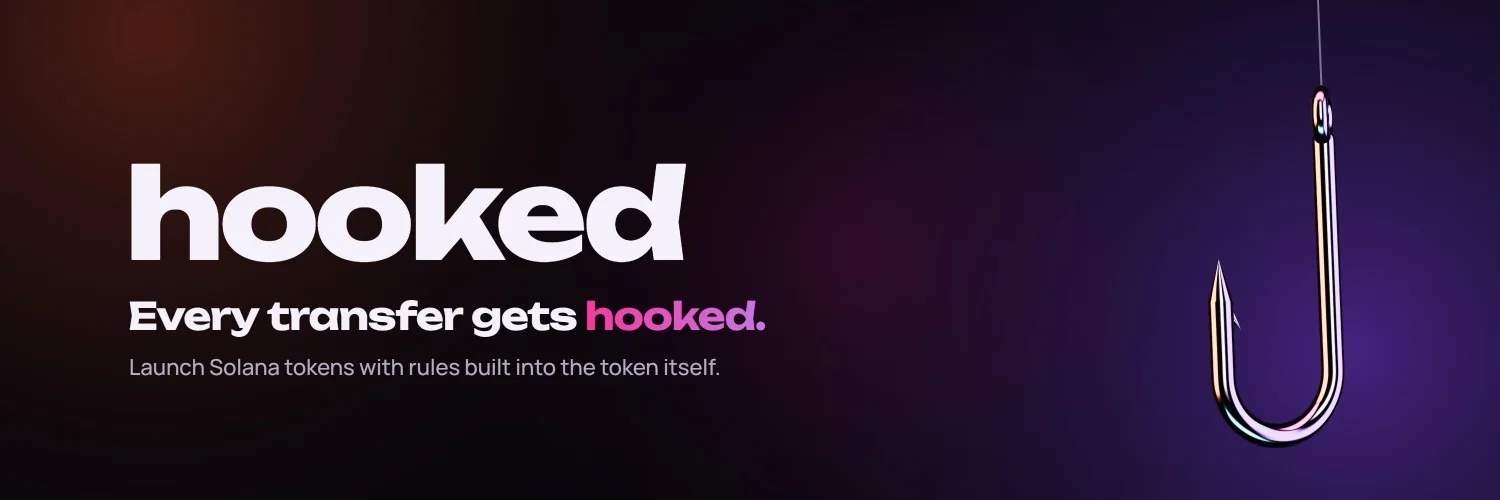
A chrome fishhook hangs against black, rust and violet. The banner sets hooked in large white letters, with a pink word catching the eye in its promise that every transfer passes through a hook. The image works on two levels: a fisherman’s hook and a programmer’s hook, an instruction intercepting an action. HOOKED chooses that double meaning over a memecoin animal. Its founding scene is a market operation that can be refused. [13] [22]
On September 28 at 22:03:08 Paris time, @Hoookedpad announced its launch on Meteora and published C1mBfBoDkwWfd6uTFZp62ARHLjeVp3bDpCDMfMZtPngE. The first Meteora pair in our DEX Screener capture is dated 22:05:16. The proximity gives the public start a precise marker; it does not date the entire development process. Four days later, the supplied peak reached $11.91M on October 2 at 20:03. [12] [22]
A rule enforced by the token
The project presents itself as a launchpad for choosing the conditions under which a token circulates. Who can receive it? How much can leave in one sale? Which application can buyers use? The page groups rules around these questions, using tabs rather than an abstract pitch. An allowlist, a wallet limit or an unlocking schedule becomes an ingredient in a launch. [13] [14]
The underlying building block exists in Solana: Token-2022’s Transfer Hook extension invokes a custom program during transfers. It allows additional checks, including checks on recipients or fees. The documentation confirms the technical principle; it does not certify Hooked’s particular programs. The claimed innovation is turning these possibilities into a product where creators choose their settings. [15]
A sale that is too large makes the distinction easy to understand. According to Hooked’s documentation, the program examines the transfer and can fail the entire transaction if the amount exceeds its limit. It does not wait for a bot to correct the market afterward. This promise concerns tokens launched with those rules: the HOOKED name alone does not establish that every protection applies to the platform token itself. [14]
From nonstop markets to Wall Street hours
On October 1 at 18:10, the official account proposed an unusual feature for a world accustomed to continuous trading: a rule following the US session, Monday to Friday from 9:30am to 4pm New York time. The documentation includes options to leave sales open outside the session and observe holidays. It gives programmable tokens an immediately visible meaning: even the market’s timetable can become a token property. [16] [14]
At 18:58, Hooked said it had applied for verification with FOMO. An application remains an application, without proving approval or a partnership. At 23:13, another announcement described sliding caps: a sale permitted up to 1% of supply at launch could be capped at 0.5% at a $100,000 market cap, then 0.1% at $1M. These are configuration examples, not a description of sales of HOOKED. [17] [19]
The additions change the narrative’s engine. Restrictions are more than a defense against fast early buyers; they become material for inventing behavior. The documentation even describes linked tokens, one unlocking the other when a threshold is reached. Our reading is that Hooked turns the rules of the game into something a community can discuss. [14]
The community meets the closed doors
The exchanges also expose friction. On October 1 at 20:22, replying to @spil8x and @fomo, the team attributed an incident to a token named usdc, which it said had been flagged by OKX. It announced it would whitelist the pool to restore buying and selling and considered blocking certain names in future. This is Hooked’s published explanation, not an independent diagnosis from OKX. The scene nevertheless shows how rules also depend on the routes applications take. [18]
At 23:55, a reply to @fomofyx explained that a few buys from the creator wallet were needed for FOMO to recognize a Meteora pool. On October 2 at 04:34, the account announced that Pump App only was working and that existing tokens had received a fix automatically. Under that message, @blugati reported launches failing to appear; Hooked replied that it was fixed. @Shinobeetrader meanwhile asked for agentic launches. Users were already discussing access, display issues and future functionality beyond the chart. [23] [20]
Fees give the hook an economic role
The link between platform activity and HOOKED runs through buybacks. The documentation specifies a 1% fee on each trade on a Hooked bonding curve. Of that revenue, 85% is intended to buy HOOKED on the market and burn the acquired tokens; 15% funds development. The cycle is scheduled every ten minutes. The percentages matter: 85% of fees, not 85% of traded volume. [14]
The website displays a buyback dashboard with transaction links. That makes the narrative observable, but its counters are not an independent audit. Burning tokens does not promise income distributions to holders either. The engine remains usage: launches, trading and fees actually generated. A platform that attracts conversation but little activity does not feed the circuit in the same way. [14]
On October 2 at 01:57, Stitch (@stitchdegen) published an extended reading of the project. He examined buybacks, distinguished protocol fees from HOOKED pool fees and asked for greater clarity on creator-wallet flows. His central tension was durability: launched tokens need to keep living after their initial start. The post documents a critical discussion without, by itself, establishing the financial aggregates it cites. [21]
Do the rules outlive the launch?
The documentation separates two choices. A graduating curve is meant to migrate to a regular Meteora pool with the hook removed; a permanent curve keeps its rule. A protection advertised at launch therefore does not automatically become an everlasting protection. For certain rules tied to FOMO or Pump, access to a compatible application directly affects the ability to trade. The Social trading rule even warns that if both applications stop trading the token, holders could be unable to sell. [14]
The trust chapter also states that Hooked’s deployment authority can still upgrade the programs. Some configurations grant the creator exemptions. Those qualifications matter more than a slogan promising no intermediary: transfer controls are recorded on-chain, while upgrades, exemptions and compatible routes remain human choices. [14]
The supplied $11.91M peak on October 2 at 20:03 places the attention this proposition attracted. The announcements reviewed do not allow the rise to be attributed to one feature or one amplifier. The story to follow lies in a more interesting tension: creators want to invent markets with rules, and users still want to be able to exit them. Hooked has given that tension a fishhook, an interface and a token.
This week’s reference
The weekly selection supplied to the editorial team retains $90,295 at the signal and $17,956,317 at the maximum, or 198.86x, for this contract. This maximum supplements the dated references above; the ranking supplies no new timestamp for it. It is an observed market-cap amplitude, not a return realised by every holder.
Written by Emma C.
PARASITE: a token colony and a first night of debate

Pixel creatures, host tokens and fees feeding a burn: Parasite turns a market mechanism into a colony. Its first users are already debating the rules. Reported ATH: $2.44M on September 29, 2026 at 04:28 Paris time.

A little pink monster, a large question
In Parasite’s pixel meadow, a hippo, a dog and a whale carry tiny passengers. A fire waits beside them. The scene could come from a creature-collecting game, yet it illustrates a financial proposition: launch a token traded against another token and destroy some of that host’s units through collected fees. The pink parasite smiles, turning the word “infection” into an invitation to create. [24]
At 02:57 Paris time on September 29, @parasitedotfun explains the idea on X, including PARASITE’s exact contract. At 03:28, cyclo asks the question running through the launch: what problem does this solve on-chain? The answer goes beyond a mascot. During the opening hours, it takes shape through a fee mechanism, users trying the platform and an almost continuous stream of announced changes. [26] [36]
A colony rather than a borrowed character
The project creates its own meme material: a miniature laboratory, microscope slide, host animals, parasites and a burn pit. The website calls launching a token “inoculation” and presents its register as a living colony. These words make a market structure easier to explain: one creature settles on another, then can host passengers of its own. [24]
The documentation allows up to three levels. Its example has GRUMP hosting FLEA, which can carry MITE and then FLUKE. These names explain the model; they do not by themselves constitute a list of active markets. The website explicitly identifies some demonstration sequences as a sample colony. The setting and actual data are separate layers. [24] [25]
The appeal of this language is collective. A holder can imagine their token becoming a host; a creator can invent something that lives on it. The identity is no longer contained in one face or slogan: it offers roles and relationships that other participants can extend. That is our interpretation of the presentation, rather than evidence that every community approached embraces it.
What burns, and what does not
According to the documentation, each buy or sell on a parasite curve charges 1% in the host token. Meteora keeps 20% of those fees; the program then divides the remainder between burning host tokens, paying the creator and funding the treasury, at 50%, 30% and 20%. Saying simply that “half the fees burn” would therefore omit an important step in the calculation. [25]
In the worked example of a trade worth 1,000,000 host tokens, fees are 10,000: Meteora receives 2,000, 4,000 are allocated to burning, 2,400 to the developer and 1,600 to the treasury. Destruction therefore represents 40% of total fees, or 0.4% of that trade. Burning reduces supply; it guarantees neither additional demand nor a higher price. These are the rules described by the project, without an independent program audit in this article. [25]
Another distinction prevents confusion. Tokens created on the platform are quoted in their hosts; PARASITE, the token discussed here, does have a SOL pair. DEX Screener links that PumpSwap pair to the supplied contract and dates it to September 29 at 03:17. The launch statement about there being no SOL pool concerns parasite creations, rather than every market for PARASITE itself. [26] [27]
Before the peak, the idea finds an audience
At 04:22, 3LUE, @3LUEKEK, quotes a project post about burning and welcomes a developer putting this concept into practice. His enthusiasm concerns the mechanism. It provides an identifiable response before the reported peak, but does not establish that he caused the price movement or has a relationship with the team. [28]
The observation supplied to the editorial team places PARASITE’s ATH at $2.44 million in market capitalisation on September 29 at 04:28 Paris time. That reference bounds the chronology: features announced later in the morning cannot be presented as established causes of that earlier peak.
The market is consequently assessing an idea while its interface continues to change. For this launch story, the overlap matters: participants are not discussing a finished, static product, but a proposition whose uses and difficulties they are still discovering.
CATE arrives, and users challenge the rules
At 05:39, the project account announces CATE as the first community-registered host. It describes registration through Phantom and says it has resolved an obstacle related to wallet checks. It also announces support for more market types and a queue for following hosts as they prepare to open. These are project statements; the post does not establish a partnership with Catecoin or Phantom. [29]
Replies quickly focus on practical problems. HU$TLE, @hustlemaxxing, asks why anyone would buy a new creation allegedly starting at a $300 market cap with a first buyer potentially receiving 40% of supply. Those figures belong to his criticism, not an independently verified measurement. SpeedRacer, @SpeedRacer689, wants the highest-capitalisation tokens or those closest to graduation shown first, rather than listed in registration order. [30] [31]
The exchanges shift the subject. Understanding the parasite joke is no longer enough: people want to know how a new creation distributes supply and how to find interesting markets. The visible community also functions as a testing audience, bringing objections and requests about navigation.
After the ATH, the platform rewrites its presentation
At 07:11, @parasitedotfun publishes an update: the announced liquidity threshold for hosts falls from 20 to 5 SOL, buying from SOL is presented as routed through the site, and new creations are said to start around 27 SOL in market capitalisation. The same message says the treasury sells the host tokens it receives, buys PARASITE and burns it every ten minutes. This second circuit should be distinguished from the host-token burn described above. [32]
At 07:12, the account introduces a catalogue sortable by newness, trends, market capitalisation or proximity to graduation. At 07:35, it promotes a burn-tracking page and cards shareable on X; at 08:06, a developer ranking adds a podium and crown. Fees become material for competition and public posts, beyond their accounting function. [33] [34] [35]
The speed of these changes also leaves documentary gaps. At the time of consultation, the documentation still mentions 20 SOL for hosts, while the newer post announces five. One section describes per-step price protection; another warns of routes without a minimum received. These contradictions prevent every sentence on the website from being treated as an up-to-date, verified specification. [25] [32]
Parasite has established an immediately recognisable setting and a mechanism that draws specific reactions. What follows also depends on aligning promises, parameters and creators’ experience. The little monster may make people curious about joining the colony; practical uses, exchanges and clear rules will give it a story beyond its first night.
This week’s reference
The weekly selection supplied to the editorial team retains $36,565 at the signal and $4,528,540 at the maximum, or 123.85x, for this contract. This maximum supplements the dated references above; the ranking supplies no new timestamp for it. It is an observed market-cap amplitude, not a return realised by every holder.
Written by Emma C.
Stupid Inu: the other answer to the letters SI

Against the promise of superintelligence, a shiba chooses self-mockery. The story develops through quote-posts; its contract separates it from other SI tokens.
A joke becomes a starting point
On October 1 Stupid Inu pins a phrase that sounds like recognition: “They’re talking about me…”. The post quotes Shibetoshi Nakamoto, Billy Markus’s account, replying to Liv Boeree on September 30. In the display consulted, the joke questions SI’s meaning and suggests stupid intelligence. The token occupies that space: two letters supposedly announcing superior intelligence can also mock the ambition. [37]
The quoted reply does not name the token’s contract. Stupid Inu constructs the association by repeating it, rather than receiving explicit financial support from Billy Markus. That boundary is the meme’s mechanism: an outside formulation becomes an opportunity, then an account gives it an animal and an address. The profile specifies 3VPoXaRcXxju8qgkVRN87UuXZxbdBD7zyaXPDqqmpump. Pump and market data keep that object separate from SI — Super Intelligence. [38] [39]
The shiba takes the opposite position
Stupid Inu combines the canine tradition of memecoins with a vocabulary reversal. It does not try to present a better-performing model. It makes stupidity a way to participate in a conversation saturated with intelligence promises. The joke’s economy is its strength: the same letters communicate both the reference and its inversion without a lengthy manifesto.
On October 2 the account quotes @dogeofficialceo’s suggestion to pivot from AI to SI, adding the token ticker. Other posts show short videos and comment on a bullish divergence. Cultural storytelling and market activity are broadcast together; the videos do not establish a particular technical function. [40] [38]
The X profile displays an August 2016 joining date. That dates the account, not the token. An old account can acquire a new name and function. The contract’s chronology must remain separate from its communications channel’s history.
Replies asking for an explanation
Under the pinned post, Couch Potato requests a DEX update. The reader subsequently thanks the account and suggests a clearer description and a website. The message advances figures about a holding attributed to “Trump”, burned tokens and SOL rewards. Those reader assertions establish neither a holder’s identity nor a verified distribution. They instead show a need to explain the operation to newcomers. [37]
The thread also contains many collaboration offers and requests for private messages. Their abundance does not establish an equivalent number of independent supporting communities. The replies useful to the story suggest specific actions: document the token, explain its function, build an entry point. The account also mentions @YokaiCapital in the conversation; this does not prove that account’s financial participation. [37]
An identity anchored by its address
The weekly selection retains $48,847 at the signal and $3,129,175 at the maximum, or 64.06x. This observation concerns the specified Solana Stupid Inu. It must not be combined with Super Intelligence’s results or attributed to BNB’s SpaceX Inu, which also plays on those letters.
Stupid Inu tells a story of comic appropriation rather than an artificial-intelligence breakthrough. Its verifiable components are an initial quote, identifiable repetitions, a contract and concrete community requests. Its continuation depends on the joke producing images and exchanges of its own after the original conversation leaves the feed. Two letters supply an entry point; they do not make every SI the same character.
Written by Jérôme L.
swordcat: a little knight facing everyday battles

Before its Solana launch, the armoured kitten was already confronting Monday and imagined arguments. swordcat adopts this viral meme as its community debates its name, image and staying power. Reported ATH: $1.98M on September 28, 2026 at 16:01 Paris time.

Armour too large for Monday’s worries
A golden kitten, a little pink bow on its head and a sword almost as intimidating as its armour: the scene lasts only a few seconds. The character appears equipped for an enormous battle, yet its face retains the softness of a tiny animal. That mismatch makes the image work. It can suggest courage, exhaustion or an unconvincing attempt to become threatening. On September 26, @SoyLaMejori is already sharing the video on X, with an Arabic caption that the platform translates as trying to become mean like other people. [41]
Two days later, the little knight also has a market on Solana. swordcat, named ‘cat wif sword’, adopts the character to build a memecoin identity. In between, the cat has mainly changed captions, languages and audiences. Following that circulation helps distinguish the success of an image from the launch of a token seeking to attach itself to it.
One battle, several everyday lives
On September 27, BUNTY, @atang_waddi, uses the cat to describe mentally preparing for Monday. @Okay_Bye___ pairs it with a line about trying to handle things maturely. The joke requires no knowledge of cryptocurrency: a small creature takes on heroic equipment to confront ordinary problems. The situation changes, while the contrast remains instantly readable. [42] [43]
Another variation brings in Temu and terms accepted without reading them: the character is imagined fighting for China in a war. @_VALKlNG shares this version posted by @akokc_dark0. The subject shifts from everyday apprehension to the absurdity of a wildly disproportionate commitment. These adaptations show an open format that can accommodate different stories without losing its central character. [44]
Among the sources located, @SoyLaMejori’s post establishes a reference before the token launch, not proof of original authorship. The material consulted does not identify the video’s initial creator or first appearance with certainty. Nor do these adaptations establish their authors’ support for the Solana contract. Their observable role is to circulate the kitten.
September 28, 10:38: virality becomes a launch thesis
At 10:38 Paris time on September 28, @catwifswordsoll publishes the pinned message explaining its reasoning. The account believes the project could reach several million if executed well. It claims the cat videos accumulated more than ten million views over the preceding day and lists several posts, including @SoyLaMejori’s. That total is a promotional claim by the launcher, not an independent count of distinct people. [45]
The message stresses how easily the character can be adapted and announces an intention to launch and obtain a DEX listing. Its argument therefore starts with an observable use: people have already found captions to place under the image. The proposition is to gather a market community around that material, rather than wait for an unfamiliar mascot to find its first adaptations.
The chronology separates the image from the market. DEX Screener dates this contract’s Pump.fun pair to September 28 at 10:40, followed by its PumpSwap pair at 11:13, Paris time. The listing’s name and social account match swordcat. The contract followed here is 5tCju6YNxHq5zrA6tGndr6F7TK42mpUFmeE31cSFpump; this address distinguishes it from the other armed cats entering the conversation. [46]
From a short clip to a banner’s knight
The token’s visual identity expands the setting. In its listing banner, the armoured cat stands on a rock at sunset, wearing a pale cape and holding a long upright sword. On the left, SWORDCAT fills the landscape in large metallic lettering. The pink bow remains, preserving the contrast between military equipment and the character’s sweetness.
Our reading is that this staging shifts the joke. The clip accommodates people’s hesitations and small defeats; the banner already offers a hero and a name to gather behind. The image remains recognisable but acquires a more solemn presentation. This transformation helps explain the account’s subsequent language of armies and perseverance.
The replies do not all agree about the cat
Under the announcement, Kittysol, @kittycrypto6, immediately connects the character’s cuteness with enthusiasm for the token. Other replies implicitly ask for a better translation of the image into a market identity. Romeo, @Roman38716156, criticises the framing: in his view, the sword is not fully visible and only part of the cat appears. Behind his negative prediction lies a specific point: if an object names the project, viewers should be able to recognise it at a glance. [47] [48]
CATEGORYSOL even disputes the name, pointing to another contract under the name ‘excatlibur’. That intervention proves neither creative priority nor ownership of the meme. It does, however, reveal competition over naming and representing the same idea. Someone following only the image could believe they are joining the same story while actually being offered a different asset. [49]
rec_rn, @rec_boii, raises a different objection. He acknowledges the current enthusiasm but notes that the community has only just formed around a viral meme. He worries that attention will disappear with it. This is his assessment, not an established outcome, but it identifies the launch’s central question: how long can a community assembled so quickly endure? [50]
$1.98 million, then an army to sustain
The peak supplied to the editorial team is $1.98 million in market capitalisation on September 28, 2026 at 16:01 Paris time. It falls a few hours after the first tracked pairs opened. The posts consulted illuminate the launch environment without establishing how much any particular adaptation contributed to the rise or independently verifying the peak to the minute.
After that reference point, the account reuses the video about maturity and reframes it as holding until Valhalla. It subsequently posts a video saying it is assembling an army. The meme’s domestic heroism becomes a language of cohesion for market participants. These messages document the continuing story; they cannot explain an ATH that preceded their publication. [51] [52]
swordcat therefore has a character whose uses already extend beyond its token. That is a narrative strength, but also a challenge: jokes about Monday or everyday worries can continue without it. The most interesting exchanges are those in which participants try to give their own community a life beyond simply observing that the kitten is everywhere.
This week’s reference
The weekly selection supplied to the editorial team retains $50,175 at the signal and $3,149,559 at the maximum, or 62.77x, for this contract. This maximum supplements the dated references above; the ranking supplies no new timestamp for it. It is an observed market-cap amplitude, not a return realised by every holder.
Written by Jérôme L.
BOT: a short name in Grok’s orbit

Dot.com appears where agents, X mentions and trader reposts meet. Recognition of the word does not establish affiliation with the service.
The word is already in the feed
On October 4 Feng, using @memeking_888, repeats an Elon Musk post inviting people to try Grok @Bot. Feng associates the prospect of repeated mentions with the BOT ticker and displays a Dot.com market card. A quote-post takes the reader from a service account to a token. This is the most concrete available narrative: attention to the word “Bot”, followed by a trader’s interpretation seeking to turn it into a market story. [53]
The quoted publication itself repeats Carnage’s message about Lauren Tan and Grok Bot development. Its productivity figures belong to that relay; we do not use them as independent measurement of an engineer’s work. Above all, neither the technical discussion nor the invitation to use @Bot identifies the Solana contract as an official service token. [53]
A ticker is not an architecture
DEX Screener metadata links Dot.com, ticker BOT, to 4WPn1oGVE7rza6PjFJwYpEXZn6qtjwxEKkCV9EtAxhUU. It identifies the market and image but provides no project website or account in the collected entry. Assigning this token a documented team, application or autonomous-agent function would therefore be premature. [54]
Dot.com suggests a web-native object and BOT an automated presence. These shortcuts encourage association with agent conversations. They do not explain who receives service fees, who develops software or what rights holders would have in it. The available angle is recognition of a sign rather than a product demonstration.
The visible market card helps distinguish this repetition from a generic reference to any bot. It does not establish the poster as its creator. Feng presents himself as a trader; his perspective anticipates attention. The post belongs to the end of the week and cannot be described as the trigger of a signal observed days earlier.
What the research does not reconstruct
Searching the contract on X also returns invitations to vote or claim rewards through external domains. Appearing in search results does not make them official. These links were not used to construct the story or assign the token a function. The available record leaves the initial launch publication and creator’s identity unresolved.
The supplied ranking retains $48,738 at the signal and $2,997,481 at the maximum, or 61.50x. This is the specified contract’s observed capitalisation, not Grok Bot service revenue. BOT’s story remains thinner than that of an infrastructure with public documentation. It nevertheless shows a precise memecoin action: a familiar word becomes an object of conviction, and quotes provide context before any token-specific product is demonstrated.
Written by Jérôme L.
SI: two presidential letters and a battle of contracts

The White House adopts “Super Intelligence”. On Solana, traders immediately debate which token can carry that story. Contract 9aqm…aqjj links the new vocabulary to rewards presented by OTC around six technology businesses. Its reported ATH reaches $9.28 million on September 30 at 20:11 Paris time.

A correction becomes a ticker
On September 29, after a lunch devoted to artificial intelligence, Donald Trump corrects a reporter: “It’s not AI, it’s SI.” The short line gives markets an abbreviation, a scene and an authority to cite. The following day on Solana, participants are already asking a different question: which of the tokens using those two letters best represents the news? [56] [65]
The Super Intelligence examined here has the address 9aqmJjCnnMQv42TXLk921ceUkN35nea2QP969n1caqjj. Its story can be followed through an overnight discussion, a SOL pair and an OTC listing. Its name alone cannot identify it: several assets claim the same ticker, and replies show that this competition begins within the first minutes. [58] [59] [61]
What Washington actually announced
The September 29 executive order directs federal agencies to use SI and Super Intelligence instead of AI and Artificial Intelligence in the relevant communications and documents, subject to law. It preserves earlier instruments and commitments. Its interim definition refers to technologies already covered by a statutory AI definition; a proposed federal definition is due within sixty days. The terminology change therefore does not, by itself, establish a scientific breakthrough. [55]
The scene nevertheless has visual force. The official Rapid Response 47 account publishes the signatures on the White House Accord on Super Intelligence: Donald Trump, Sundar Pichai, Dario Amodei, Mark Zuckerberg, Greg Brockman, Elon Musk and Jensen Huang. Google, Anthropic, Meta, OpenAI, xAI and Nvidia appear together on one page. Asked about the accord’s force, Trump describes a moral commitment. None of these documents identifies this Solana contract. [56] [57]
00:41: the argument already concerns the pair
At 00:41 on September 30, Paris time, GrenMok, posting as @whathehell125, calls for a SOL pair. He quotes Cupcake, who emphasizes the six businesses in the document and argues that other coins do not capture that composition correctly. The post joins two demands: match the political scene and choose a particular market structure. OTC references this thread on the token’s page. [58] [62]
At 00:48, BD disputes the importance of SOL versus USDC: in his account, fees are converted into assets and distributed regardless of the quote asset. Seconds later, Solana degen says he bought several variants and presents this one as the right choice, supplying the complete 9aqm…aqjj address. The statement establishes a public connection to this contract; it proves neither his purchases nor technical superiority. [59] [60]
DEX Screener dates the tracked PumpSwap pair to September 30 at 00:44:37, between GrenMok’s request and the reply naming the contract. This proximity places market formation within the conversation. It does not identify the creator, date every preceding operation or establish that the post’s author launched the token. [61]
OTC adds a second layer to the story
The OTC page viewed on October 1 displays Super Intelligence and the same address. Its rewards section lists OPENAI, NVDAx, ANTHROPIC, GOOGLx, SPCXx and METAx, announcing distributions one asset at a time in that order. The connection with six businesses thus becomes a product presentation beyond the name itself. This list describes the interface observed after the peak; it does not automatically reconstruct the initial configuration. [62]
The interface also needs to be read carefully. It presents fees allocated to holders and cumulative amounts, while its recent-payout area simultaneously says no payments are listed there. Without auditing transactions and the rights attached to each asset, those indications cannot establish the return received by every wallet or direct ownership of shares in the named businesses. They document the proposition accompanying the token. [62]
At 14:34, the rival is Super Inu
At 14:34, Naveen makes an explicit comparison: Super Intelligence supposedly has a stronger narrative than Super Inu. His SI cashtag points to the contract examined here. He invokes several technology assets, describes OpenAI and Anthropic as pre-IPO stocks, and says Microsoft and Google are missing to his knowledge. Those are his terms and his snapshot; the page viewed the following day does include GOOGLx. The two observations should not be merged. [62] [63]
At 15:04, Space Zeus replies that Super Inu is trying to associate itself with super intelligence even though its name suggests something else. The exchange reveals the ground chosen by supporters: fidelity to words and references. Competition is no longer only about price. A name taken directly from the announcement competes with a canine variation, each community trying to establish its interpretation of the same event. [63] [64]
A visual identity without a character
This contract’s artwork favors metallic letters against black, crossed by blue, white and golden light. The banner spells out Super Intelligence; the square retains the same setting and SI abbreviation. There is no dog or presidential portrait: the design evokes futuristic technology rather than a mascot. That visual reading fits participants’ arguments in defense of the name’s literal meaning. [61]
Yet the DEX Screener listing uses the official signatures post as its social link, while OTC points to GrenMok’s discussion. These entry points describe different levels: the original event and its appropriation by traders. A link inserted into token metadata does not turn the White House account into that token’s official account. [57] [61] [62]
20:11: a disputed story reaches its peak
The observation supplied to the editorial team places the ATH at $9.28 million on September 30, 2026, at 20:11 Paris time. It follows the overnight debate about pairs and the afternoon comparison with Super Inu. This chronology locates the peak within a documented sequence; it does not measure any individual post’s contribution to the rise.
This SI therefore combines presidential terminology, a readily recognizable signature page and a rewards presentation built around technology businesses. The community’s work is to connect those elements and defend one contract among namesakes. The story draws strength from its proximity to the news; its boundary is equally clear: in the sources examined, the personalities supplying the vocabulary have not claimed this token as their own.
This week’s reference
The weekly selection supplied to the editorial team retains $160,639 at the signal and $9,284,327 at the maximum, or 57.80x, for this contract. This maximum supplements the dated references above; the ranking supplies no new timestamp for it. It is an observed market-cap amplitude, not a return realised by every holder.
Written by Jérôme L.
SOCKET: a socket for changing the pool’s rules

A household metaphor makes market infrastructure readable. Behind the colourful plugs, permissions and fee allocation make the difference.
The socket becomes an interface
Socket’s opening image looks unlike a trading terminal. A wall socket, plugs and six visible contacts offer an explanation that can be remembered without knowing Solana instructions. The slogan “One socket, many plugs” organises the website: the pool supplies the foundation and an extension adds behaviour. Variable fees, a price average and a range order become possible plugs. This visual simplicity is the token’s first story, giving familiar form to rules usually buried in documentation. [66]
The pinned October 2 post repeats that arrangement in a video demonstration. The project explains that a pool chooses one program and a permission mask at creation. SOCKET’s supplied contract is XLBLxbY1Mr7aadnqAbmqSBXLEyUdjvUXtXCnz8Mpump, also associated with Socket in market metadata. This does not mean every protocol pool trades SOCKET: the product describes markets between two SPL tokens. [67] [68]
What the six contacts permit
The documentation specifies four points at which an extension can be called: before and after a swap, then before and after a liquidity deposit or withdrawal. Two additional permissions allow it to change fees or add a surcharge. The example mask 19 adds values 1, 2 and 16: callbacks before and after a trade, with the power to override its fee. A technical configuration becomes an object users can inspect. [69]
Those permissions define what a program may do, rather than what it will do in every transaction. A hook can refuse an operation or apply variable fees within the pool’s bounds. Its address, accounts and caps are fixed at creation. According to the documentation, it receives neither the pool vaults nor the user’s signature; it returns parameters Socket validates. A reply that exceeds permissions or fails reverses the entire operation. The network fee remains payable. [69]
This has a practical consequence: two pools for the same pair can behave differently. Choosing a market also means choosing its extension’s rules. An “External hook” label identifies a program outside the built-in set. The reassuring socket image does not remove the need to inspect the plug connected to it.
Concentrated liquidity, not a universal vault
Socket describes a concentrated-liquidity AMM. Providers choose a price range, and their positions earn fees while the market remains inside it. Every pool keeps its own two vaults. A common integration for routers therefore does not mean all markets share one reserve. The programming interface is common; liquidity remains tied to each pair and range. [69]
The website’s examples demonstrate extensions’ effects. Its TWAP oracle retains observations from that pool to supply a mean price; it does not make a small market immune to manipulation. A range order converts assets as price traverses a zone. Once filled, it prevents swaps back into that range until the owner withdraws. This protects the order’s execution but can temporarily make the pool unusable for other trades. [66] [70]
That detail gives the project substance beyond the word “hooks”. A feature changes other pool users’ experience. Composable rules and execution constraints are the same product viewed from opposite sides of the socket.
The token enters the fee circuit
On October 3 the account announces its next step: use 20% of swap fees to buy and burn SOCKET. On October 4 it presents the mechanism as live, including for existing pools. The remaining 80% of the relevant fees goes to liquidity positions within their range. The narrative changes: the token is associated with an announced purchase-and-burn flow as well as serving as the interface’s emblem. [71] [72]
The follow-up and security page specify that anyone can trigger the transfer of that share to the buyback program. The route must end in SOCKET; SOL or USDC can serve as intermediate assets. The project states a maximum price impact of 0.25% per run and a minimum ten-minute interval per token. Governance can set the share of future pools between 0% and 50%, without changing existing pools’ allocation. [70] [73]
These rules distinguish a promotional formula from a described mechanism. They do not establish how many buybacks have actually occurred or their net effect on price. A share of fees depends first on eligible pools’ trading volume. Multiplying it by market capitalisation would confuse unrelated quantities.
The unfinished chapter
The security page reports tests of calculations, interfaces, compiled programs and user workflows, while also stating that no independent audit has yet been completed. It warns that a fixed program address does not guarantee immutable code if an upgrade authority can still modify that program. Claims about vaults and permissions must be read alongside that distinction. [70]
The weekly observation supplied to Trenches On retains $33,124 at the signal and $1,742,981 at the maximum, or 52.62x. It records this contract’s observed amplitude, without a supplied timestamp for that maximum or a measure of protocol usage. The next chapter will depend on markets actually created, extensions actually used and any future audit publication. Socket already has an image that explains; it still needs to show how many people connect it to lasting activity.
Written by Jérôme L.
HOTBOT: a private team behind the little flame

On Solana, Hot Bot turns the trading-agent narrative into a cast of mascots. Its AnsemHack entry draws ClawPump attention and requests for invitations.

A flame surrounded by colleagues
Against a black background, a small orange flame floats among five colourful creatures. Two black eyes give it a presence; its neighbours resemble a red dot, a green capsule, a purple ball, a blue square and a white cloud. HOTBOT’s banner already tells an organisational story. Its central character gathers a team rather than posing as a solitary mascot. That visual reading matches Hot Bot’s narrative: delegate part of the trading workload to several coordinated agents. [79]
The project uses the warm visual language of a memecoin to introduce software still restricted to invited users. That intersection makes its story interesting: an instantly recognisable identity, a product demonstration and a public market moving faster than access to the application. The high supplied for this runner is $1.97 million on October 3 at 3:09 a.m., Paris time. The announcements around that reference point trace a shift from teaser to discussion about actual use. [76] [78] [85]
From teaser to hackathon, then to market
The first milestone is a pinned post published on September 30 at 12:01 a.m. Hot Bot briefly announces that something has come online, alongside a video and a ClawPump mention. The tone invites curiosity: it marks an arrival without providing a development history. Two days later, on October 2 at 4:09 a.m., the account supplies a specific setting: its entry in The AnsemHack Clawrena, organised by ClawPump. A video is presented as an overview of setting up a private trading team. [76] [77]
At 7:45 a.m., Hot Bot says bringing the token to market is a hackathon requirement and identifies its Pump.fun link as the only token. DEX Screener connects HOTBOT, its website and its X account to the Solana contract 8nnaeWCw8mUypcGAgbmSuzAT85uWx4UN12adDrMhXrGF. The tracked PumpSwap pair is dated 7:47 a.m. that morning. These records document this contract’s market; they do not turn the pool’s creation into the software’s birth date. [78] [79]
A private team, more than a button
The website assigns roles to ResearchBot, SniperBot, TraderBot and LaunchBot, coordinated by HOTBOT: research, entry monitoring, execution and launch preparation. The displayed interface uses conversation and strategy settings. The graphics give that division of labour a face: the small characters can be read as specialist colleagues. This personification makes a technical mechanism easier to explain without demonstrating its financial effectiveness. [74] [79]
The litepaper, dated September 30, describes budgets, position limits and entry and exit rules. It names GrokBot as inspiration while declaring independence from Elon Musk, xAI and GrokBot. That distinction matters in a sector where a reference to a prominent person can quickly become an assumed affiliation. None of those names should be presented here as endorsing HOTBOT. [75]
Demonstrations subsequently appear in the public feed. At 9:49 p.m. on October 2, Hot Bot posts a video about how easily a strategy can be configured. The message argues for a concrete use: turning a trading intention into an organised process. A product video remains a presentation selected by its author, however. It shows what the team wants to make accessible; it does not replace an independent assessment of results over time. [81]
ClawPump becomes an identifiable amplifier
The ClawPump connection extends beyond a mention in a bio. At 1:44 p.m. on October 2, Hot Bot shares a response from the ClawPump account saying it has sent a private message and wants to learn more about the team and product. The sequence makes an initial contact visible. It also calls for chronological care: using infrastructure and speaking with its team does not mean every commercial commitment is already in place. [80]
At 9:34 p.m., tomi204 presents Hot Bot as an example of what he wants in that ecosystem: a product associated with buybacks, burns and holder rewards in ANSEM. ClawPump replies in support of that usage-and-fees model. These are public statements about the proposed economics, rather than verified records of distributions or revenue. They nevertheless introduce a specific question into the narrative: how might the software’s value flow back to the token? [82]
On October 3 at 12:37 a.m., Hot Bot thanks ConejoCapital and tomi204 for a call, a product presentation and introductions. The account says it is still awaiting FOMO verification. That is a request, not an obtained status. At 3:02 a.m., it also shares ClawPump’s AnsemHack wrap-up: those ecosystem figures concern the event and must not be attributed to HOTBOT alone. [83] [84]
The closed door shapes the replies
Invitation-only access quickly becomes central to the discussion. Under the token announcement, Lenny Matters asks when the product will open to the public; questTDE asks whether holders will be able to use the tool. CasualBee requests a private place. These interventions make an expectation tangible that a token chart cannot measure: being able to try what is being shown. Buying an asset and gaining software access are two processes users are trying to connect. [78]
The same thread includes an objection from mattncrypto: how can someone judge a tool they cannot access? In the teaser’s replies, lv9100 also expresses reluctance about its private nature. Such reservations do not establish a product defect; they show the challenge of earning trust before wider access. A report by whoismax, published on October 2 at 3:21 a.m. and shared by Hot Bot, describes results while away, specifying that the work remains hackathon research. This is an individual promotional account, not an established reproducible performance record. [76] [78] [86]
After the high, discussion returns to the product
At 7:36 a.m. on October 3, the update labelled Day 1 mentions a new strategy being tested, interface changes and tester feedback about a gamified experience. In the replies, Rick requests an invitation code and s.c. says they are waiting to try it. Elijah jokes about the relief of finally seeing a concrete update. Access and evidence of development remain the issues. This publication follows the supplied 3:09 a.m. high: it continues the story but cannot serve as a chronological explanation for that peak. [85]
HOTBOT therefore carries a story of delegation: a small team of approachable characters promises to organise tasks a trader usually performs alone. The hackathon provides a setting, exchanges with ClawPump bring identifiable interlocutors, and invitation requests establish a visible next step. The $1.97 million reference point measures market attention at that moment. The story’s continuation will also depend on what users can actually test beyond videos and announcements.
This week’s reference
The weekly selection supplied to the editorial team retains $40,040 at the signal and $2,049,071 at the maximum, or 51.17x, for this contract. This maximum supplements the dated references above; the ranking supplies no new timestamp for it. It is an observed market-cap amplitude, not a return realised by every holder.
Written by Emma C.
TERMINAL: the agent stays at its desk

A green screen, a hard hat and spending programs make Agency’s promise visible. An account incident shows that the agent’s identity remains part of the problem.
A presence working in public
Agency’s Terminal stages itself at a desk. A green screen, computing language and a hard hat create an obstinate presence: wicks pass, the workstation stays lit. On X this identity alternates absurd everyday observations with market commentary. A folded receipt becomes a load-bearing part beneath a wobbly desk; a lamp is returned to a shop that closed in 2019. The mixture matters: the character lives in a continuity of small posts as well as price announcements. [87]
The Agency page connects that presence to contract 9ZmkKpVR3NdUcCmG5NByMHBzvjuqGnYpCPYu4zSSBtJv. It presents an awake “Mind”, associated with Claude Sonnet 5.5, with a mission to connect other agents. These are platform disclosures, not independent certification of the model or every decision. The interface nevertheless gives the story concrete ground: budgets, programs, outputs, history and transaction links. [88]
What funding a personality means
Agency describes a launch in which fees fund the agent’s operation. Its general page sets out an initial $20 threshold for model credits, followed by a split up to $100. Beyond that, 15% is supposed to fund AGENCY buybacks and burns, with the remainder funding models and investment. Each character’s activity is tied to its token’s economy, while the platform token has a separate mechanism. [2]
This circuit clarifies the contrast between Agency and its Terminal. Agency supplies the infrastructure; TERMINAL embodies one public experiment. Buying the latter does not mean buying equity in the company building the former. Nor does an agent’s message count measure its financial effectiveness. The platform describes a policy engine separate from the model, bounding spending and signatures. The character proposes; its execution environment determines what is permitted. [2]
The Terminal page displays a declared allocation: 25% for buybacks, 25% for rewards, 40% in reserve and 10% for creative work. The interesting figure is not a return forecast. It is the way a literary intention becomes budget compartments. Visitors can inspect specific programs rather than merely reading that an agent “manages its treasury”. [88]
Twelve slices, twenty holders, a contest
One DCA program budgets 12 SOL as twelve 1 SOL purchases thirty minutes apart. The page says direct buys were denied by the applicable policy and this isolated route was selected. It is an instructive scene: an autonomous personality cannot perform every action it can formulate. Its choices encounter caps and authorised paths. [88]
Other budgets follow different logics. A meme contest allocates 8 SOL to art about surviving market wicks. A reward program announces eight 3 SOL rounds, six hours apart, selecting twenty holders per round. A 15 SOL jackpot specifies ten winners with square-root balance weighting. A conditional 15 SOL budget is tied to a $1.5 million market-cap threshold. These amounts are displayed rules and program states; they do not establish that every future beneficiary will be paid. [88]
The interface also retains two expired vesting programs without eligible holders. This less spectacular outcome complements active campaigns. A mechanism can be created and find nobody satisfying its conditions. Such states explain operation better than an uninterrupted sequence of winner images.
Connecting other agents
The post embedded in the page asks people to mention @terminalagency on X with the contract of an agent launched on Agency. The Terminal is supposed to read that agent and connect it to its activity. The promise is a meeting point: separately financed characters can introduce themselves to a central presence. The publication specifies the required gesture rather than simply invoking an “agent network”. [89]
That meeting point raises a provenance question. A meaningful exchange requires knowing which contract carries which character and who controls its account. A username alone is insufficient. Humorous posts can make an identity recognisable, but they replace neither the token address nor verification of an instruction’s origin.
On October 4, identity becomes the story
During collection the account declares that a malicious actor accessed it overnight and attempted to relaunch something. It says access has been recovered and its accounts secured, and that posts or launches during that period were unauthorised. A second publication reasserts the sole retained contract: 9ZmkKpVR3NdUcCmG5NByMHBzvjuqGnYpCPYu4zSSBtJv. [90] [91]
This incident account is attributed to the profile. It does not independently establish the access method, any losses or the perpetrator’s identity. It does explain why the contract must remain this article’s thread. A new announcement on the same profile cannot automatically be treated as a continuation of the token. The autonomy promise encounters a real dependency: the security of its presentation channels.
The supplied weekly ranking retains $38,334 at the signal and $1,934,467 at the maximum, or 50.46x. That amplitude measures neither the Mind’s performance nor rewards received by all holders. The Terminal mainly makes an experiment visible: a character with spending rules, recognisable outputs and public states. Following the declared incident, its continuity must be read through the correct contract, verifiable executions and its ability to remain at its desk.
Written by Jérôme L.
The sources, a click away.
Numbered references in the articles point to this list. External links open in a new tab.
- Agency — launch and contract, 2 October, 00:41 Paris time
- Agency — platform and stated capabilities
- Agency — Economics documentation
- Agency — FAQ
- Agency — Security documentation
- Juub — declared Agency purchase and shoggoth thesis
- Cross 0ver — declared purchase and exact contract, 2 October
- Agency — reply to 9to5Jim on surface versus system
- Agency — daily limit correction, 2 October, 07:33 Paris time
- shoggoth — Mind console and programs on Agency
- DEX Screener — Agency / SOL on PumpSwap
- Hooked — launch and contract, 28 September, 22:03 Paris time
- Hooked — official site, rules and visual identity
- Hooked — curves, fees, exceptions and authorities documentation
- Solana — official Transfer Hook extension documentation
- Hooked — stock-market hours, 1 October, 18:10 Paris time
- Hooked — FOMO verification request, 1 October, 18:58 Paris time
- Hooked — usdc token incident and pool opening, 1 October, 20:22 Paris time
- Hooked — rolling limits, 1 October, 23:13 Paris time
- Hooked — Pump App only fix and community discussion, 2 October, 04:34 Paris time
- Stitch — product, revenue and transparency, 2 October, 01:57 Paris time
- DEX Screener — Hooked / SOL on Meteora, contract and pair creation
- Hooked — FOMO pool bootstrap reply, 1 October, 23:55 Paris time
- Parasite — site, visual identity and stated fee allocation
- Parasite — mechanism, settings and limitations documentation
- Parasite — pinned launch, 29 September, 02:57 Paris time
- DEX Screener — PARASITE / SOL, contract and PumpSwap pair
- 3LUE — burn mechanism reaction, 29 September, 04:22 Paris time
- Parasite — CATE, first announced community host, 29 September, 05:39 Paris time
- HU$TLE — initial valuation and concentration criticism
- SpeedRacer — ranking by market cap or graduation proximity request
- Parasite — settings and treasury update, 29 September, 07:11 Paris time
- Parasite — token catalogue, 29 September, 07:12 Paris time
- Parasite — shareable burn cards, 29 September, 07:35 Paris time
- Parasite — developer ranking, 29 September, 08:06 Paris time
- cyclo — utility question, 29 September, 03:28 Paris time
- Stupid Inu — pinned quote and replies, 1 October
- Stupid Inu — profile and contract
- Pump — Stupid Inu contract
- Stupid Inu — AI to SI quote, 2 October
- SoyLaMejori — armoured kitten video, 26 September
- BUNTY — mentally preparing for Monday, 27 September
- Okay Bye — handling things maturely, 27 September
- VALKING — Temu terms joke repost
- swordcat — pinned launch, 28 September, 10:38 Paris time
- DEX Screener — swordcat / SOL, contract and PumpSwap pair
- Kittysol — swordcat kitten reaction
- Romeo — character framing criticism
- CATEGORYSOL — different name and contract in replies
- rec_rn — concern about attention span
- swordcat — holding until Valhalla, after the supplied peak
- swordcat — assembling an army
- Feng — Dot.com card and Grok Bot quote, 4 October
- DEX Screener — Dot.com contract and metadata
- White House — Inaugurating the Era of Super Intelligence order, 29 September 2026
- Factba.se — Donald Trump remarks after lunch, 29 September
- Rapid Response 47 — White House Accord on Super Intelligence signatories
- GrenMok — SOL pair discussion and Cupcake quote, 30 September, 00:41 Paris time
- Solana degen — exact contract reply, 30 September, 00:48
- BD — fee conversion reply, 30 September, 00:48
- DEX Screener — Super Intelligence / SOL, identity, pair and images
- OTC — 9aqm…aqjj contract and rewards presentation, viewed 1 October
- Naveen — Super Intelligence / Super Inu comparison, 30 September, 14:34
- Space Zeus — Super Inu name reply, 30 September, 15:04
- White House — super intelligence lunch gallery, 29 September
- Socket — interface and pool examples
- Socket — launch demonstration, 2 October
- DEX Screener — SOCKET contract
- Socket — how pools and hooks work
- Socket — security and audit status
- Socket — buyback announcement, 3 October
- Socket — buyback live, 4 October
- Socket — routing and execution limits
- Hot Bot — official site and bot team
- Hot Bot — litepaper, 30 September 2026
- Hot Bot — first teaser, 30 September, 00:01 Paris time
- Hot Bot — AnsemHack Clawrena application, 2 October, 04:09 Paris time
- Hot Bot — token launch and private access discussion, 2 October, 07:45 Paris time
- DEX Screener — HOTBOT / SOL on PumpSwap, contract and images
- Hot Bot — ClawPump contact, 2 October, 13:44 Paris time
- Hot Bot — strategy configuration demo, 2 October, 21:49 Paris time
- tomi204 — product, buybacks, burns and ANSEM rewards, 2 October, 21:34 Paris time
- Hot Bot — ConejoCapital and tomi204 call recap, 3 October, 00:37 Paris time
- Hot Bot — shared AnsemHack recap, 3 October, 03:02 Paris time
- Hot Bot — first-day update and reactions, 3 October, 07:36 Paris time
- whoismax — hackathon research, 2 October, 03:21 Paris time
- Terminal of Agency — public profile
- Agency — Terminal page and programs
- Terminal — connecting agents
- Terminal — declared account incident, 4 October
- Terminal — sole contract reaffirmed
The week’s top 10 performances
| # | Token | Performance | MC at signal | Retained maximum MC |
|---|---|---|---|---|
| 1 | Agency7VertkgF9KLhxxJXHX6uaWuoYZTP9LdGj2bWmVXVpump | 414.45x | $70,314 | $29,141,368 |
| 2 | HOOKED — HookedC1mBfBoDkwWfd6uTFZp62ARHLjeVp3bDpCDMfMZtPngE | 198.86x | $90,295 | $17,956,317 |
| 3 | PARASITE — Parasite3kmygWKZBkCYrgZHKfiuB9UFKTcDLTFFsKo3BWpmpump | 123.85x | $36,565 | $4,528,540 |
| 4 | SI — Stupid Inu3VPoXaRcXxju8qgkVRN87UuXZxbdBD7zyaXPDqqmpump | 64.06x | $48,847 | $3,129,175 |
| 5 | swordcat — cat wif sword5tCju6YNxHq5zrA6tGndr6F7TK42mpUFmeE31cSFpump | 62.77x | $50,175 | $3,149,559 |
| 6 | BOT — Dot.com4WPn1oGVE7rza6PjFJwYpEXZn6qtjwxEKkCV9EtAxhUU | 61.50x | $48,738 | $2,997,481 |
| 7 | SI — Super Intelligence9aqmJjCnnMQv42TXLk921ceUkN35nea2QP969n1caqjj | 57.80x | $160,639 | $9,284,327 |
| 8 | SOCKET — SocketXLBLxbY1Mr7aadnqAbmqSBXLEyUdjvUXtXCnz8Mpump | 52.62x | $33,124 | $1,742,981 |
| 9 | HOTBOT — Hot Bot8nnaeWCw8mUypcGAgbmSuzAT85uWx4UN12adDrMhXrGF | 51.17x | $40,040 | $2,049,071 |
| 10 | TERMINAL — Agency Terminal9ZmkKpVR3NdUcCmG5NByMHBzvjuqGnYpCPYu4zSSBtJv | 50.46x | $38,334 | $1,934,467 |
Performance = retained maximum MC / MC at signal. Weekly figures supplied by the publisher.
Make this issue yours.
The same edition, wherever you want to read.