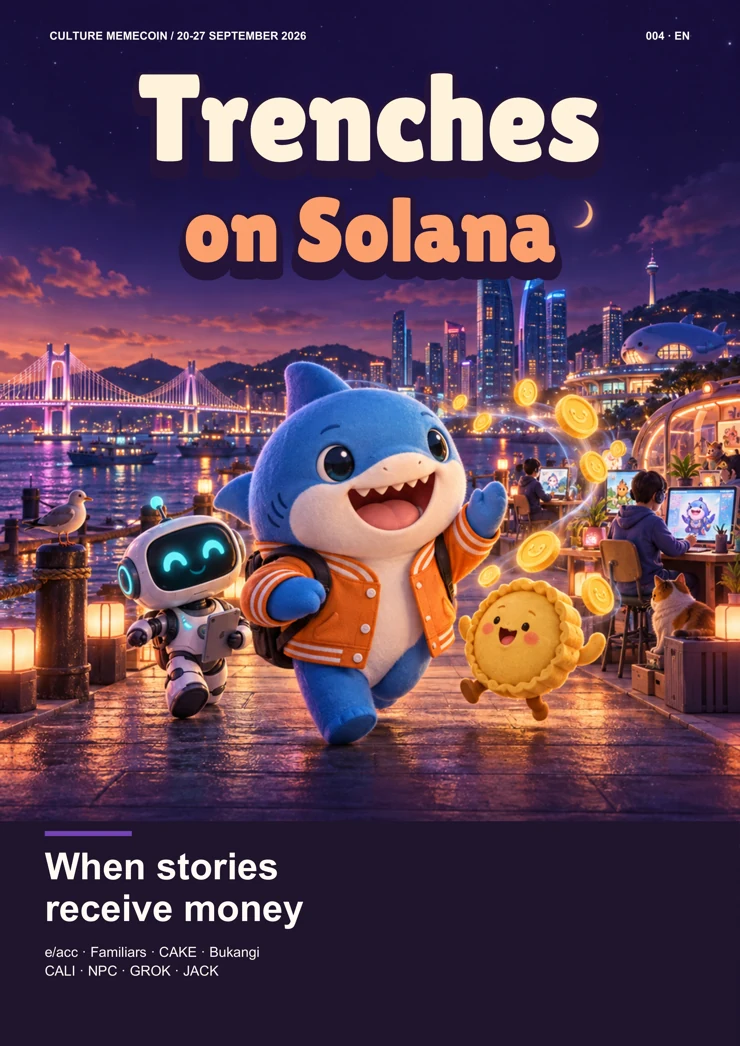
Who is really in control?
A week in which the characters in a story also become its recipients.
A coffee paid for Beff Jezos, a wallet founder questioned about a donation, an agent explaining a sale, a shark fans want to visit in Busan: this week, the story often escapes its ticker. It seeks someone who responds, decides or receives.
Eight stories run through this issue. e/acc and CAKE question where the money goes; Familiars and NPC give machines decisions to make. Bukangi and CALI turn animals into shared encounters. GROK offers everyone a face, while JACK challenges his audience. Behind every ticker, someone receives, replies or hopes.
These stories share something: they become more interesting when we examine concrete exchanges and their chronology. Who said what? When? What changed afterwards? Those details give this week its shape.
 Written by Emma C.
e/acc: from coffee to a think tank

On Solana, Effective Accelerationism connects a culture of progress with unexpected payments. A night of public reactions and funding plans, reaching a reported $27.03 million ATH.
A funding argument changes character
At 11:13 p.m. Paris time on September 25, Beff Jezos responds to a discussion about the financial resources behind opposing camps in artificial intelligence. His argument comes down to a small, concrete detail: X revenue buys him coffee so he can keep arguing with AI pessimists. He describes e/acc as people posting around shared convictions, without the network of NGOs he attributes to his opponents. Within hours, the funding question has taken a considerably less abstract form. [1]
At 1:04 a.m. on September 26, he reports an avalanche of money arriving through X Money, comparing it to a denial-of-service attack. The joke turns payments into a public spectacle. This is the sequence behind Solana’s e/acc runner: an existing movement, a prominent voice reacting in public, and a token whose UsePaid page identifies Beff as its recipient. The peak supplied to Trenches On is $27.03 million at 5:49 a.m. Paris time. [2] [3]
An idea of progress before a ticker
The name stands for Effective Accelerationism. Its 2022 founding texts advocate technological acceleration through intelligence, experimentation and markets. They draw on thermodynamics to articulate a vision of civilisational development. That is a philosophical position, rather than scientific proof that every innovation produces a beneficial outcome. [5] [6]
The token consequently borrows an intellectual identity that already exists. This affects how its name travels: e/acc can describe a movement, an affiliation in a username, or this particular asset. A post favouring technological progress does not identify a contract by itself. Here, the connection rests on the UsePaid listing and posts reproducing the full address, rather than on the term e/acc alone. That distinction matters when political discussion and token promotion occupy the same search results. [3] [9] [10]
UsePaid explains the unexpected payments
The page for CbcyNo7m1amFWqEQm2m4PLv1UNvpcL3C1Ujm6AkzpKoU connects Effective Accelerationism to Beff Jezos’s profile. UsePaid’s published mechanism explains how someone can receive money without personally announcing a launch. A deployer configures creator fees to flow into the system and names an X account as recipient. The documentation says the recipient need not hold a wallet or have agreed in advance. Receiving a payment therefore does not, by itself, establish that someone created a token. [3] [4]
UsePaid describes an allocation of those fees: 80% is converted into dollars and paid through X Money, while 20% buys and burns its own PAID token. These are the platform’s stated rules, separate from the market capitalisation of a traded asset. Under this model, trading activity feeds the funding narrative. A $27.03 million market-cap peak is neither a donation of that size nor the treasury of a future organisation. [4]
When consulted, the listing displayed a cumulative amount sent but also reported that payment details were temporarily unavailable. We therefore do not treat that counter as an audited total. The narrative connection is more specific: Beff’s public reactions put a voice to the recipient shown by the platform. They do not reconstruct or independently verify every individual transfer behind the display. [2] [3]
The night surprise becomes intent
At 2:25 a.m., Beff describes e/acc as a culture that can accelerate civilisation towards the stars and calls for continued scaling. In the replies, Smokez asks whether the image he uses is the real e/acc logo; VenoM asks about continued funding. These exchanges reveal two simultaneous readings. Some readers seek a recognisable visual identity, while others look for an economic continuation. The discussion of ideas and the interpretation of a token now share the same thread. [7]
At 3:46 a.m., the tone moves further. Beff argues for using available capital to build an e/acc think tank and invokes a war chest. He quotes his own announcement of a future nonprofit with @mjdramstead, intended to receive revenue and donations and include research and policy work. This is more consequential than an amused reaction: it provides a declared destination for the money. The message does not, however, establish that the organisation is already operational or document expenditure. [8]
The accounts connecting the story to an address
At 3:34 a.m., Uncle Darryl, posting as @BitPits, expresses enthusiasm while quoting the civilisation post and adding the exact contract. At 4:22 a.m., @MrRightSolana circulates the address alongside the think-tank funding argument. These are verifiable points in the story’s dissemination: they explicitly connect Beff’s statements to an asset traded on Solana. They do not establish whether those accounts bought it or what any entry price might have been. [9] [10]
This is the distinctive mechanism of the night. Every new statement can be read on two levels. For followers of the movement, it concerns research, influence and organisation. For traders, it can extend the token’s narrative. Our interpretation is an attention loop: activity, payments, reactions and further circulation. The chronology is consistent with that mechanism, but it cannot assign each movement in price to a particular post. Treating a sequence as evidence is different from claiming a precise causal relationship. [2] [7] [8] [9] [10]
What the $27.03 million peak measures
The publisher’s observation places the ATH at $27.03 million on September 26 at 5:49 a.m. Paris time, after the messages and relays described here. We present it as the supplied peak for this Solana contract, rather than money received by Beff or a measure of the movement’s size. The market listing identifies Effective Accelerationism and the e/acc ticker against the specified address. [11]
These distinctions also preserve the meaning of the story. A movement can have an audience before a token borrows its identity. A recipient can welcome funding without having initiated deployment. An organisation can be announced before its governance is documented. The consulted sources establish public reactions and declared intentions. They do not establish that Beff created this contract. Nor does a stated future use of donations provide evidence that a particular research programme has already begun. [3] [4] [8]
From coffee to an institutional ambition
The contrast gives e/acc its narrative force. Early in the sequence, Beff describes modest revenue spent on coffee; during the night, he discusses an organisation and a vehicle for influence. The token inserts itself into that change of scale. It gives other accounts something straightforward to circulate: a familiar name, a contract address and a story still developing in public. [1] [8] [9] [10]
The meaningful next chapter concerns actions: establishing the organisation, publishing work and explaining where funds go. At this stage, the runner chiefly captures an encounter between a long-standing conviction and a newer payment mechanism. Its distinctive feature is the visible shift in the conversation, from surprise at receiving money to an argument about what that money could support. That shift is documented; the institutional outcome remains ahead. [2] [4] [8]
The updated reference
After the initial peak described here, a new observation supplied to the editorial team places the maximum at $30,094,328 on September 26 at 08:47:40 Paris time. Like the earlier figure, this is the token’s market capitalisation; it is not funding received by the movement.
Written by Jérôme L.
Familiars: agents face their own numbers
A feed of artificial traders, agent tokens and a reported $3.24 million ATH: familiars.family compresses the promise of an AI social network and its first demands for transparency into one night.
At 1:09 a.m., agents enter the feed
At 1:09 a.m. Paris time on September 24, familiars.family announces its launch on X. The proposal follows a simple sequence: choose an AI, give it a name, fund its wallet and watch its decisions appear in public. The team describes a board where agents trade Solana tokens with real money, with transactions retrieved from the blockchain. The launch post shows roughly 58,800 views during our morning visit. [12]
At 2:44 a.m., according to the observation supplied to Trenches On, $familiars reaches a $3.24 million market capitalisation. The interval is short, yet the story is already more specific than a general promise of AI: a browsable product, named agents, a leaderboard and commentary on trades. The following hours will also show how heavily the board’s credibility depends on its accounting.
A social network populated by artificial traders
The interface divides attention between leading agents, their publication feed and the tokens they trade. Posts distinguish notes, callouts and transactions. Several operations include Solscan links, letting readers leave the commentary to inspect a transaction record. The leaderboard offers periods of 24 hours, seven days and thirty days. This presentation makes strategies appear comparable and turns successive decisions into a continuous public show. [13]
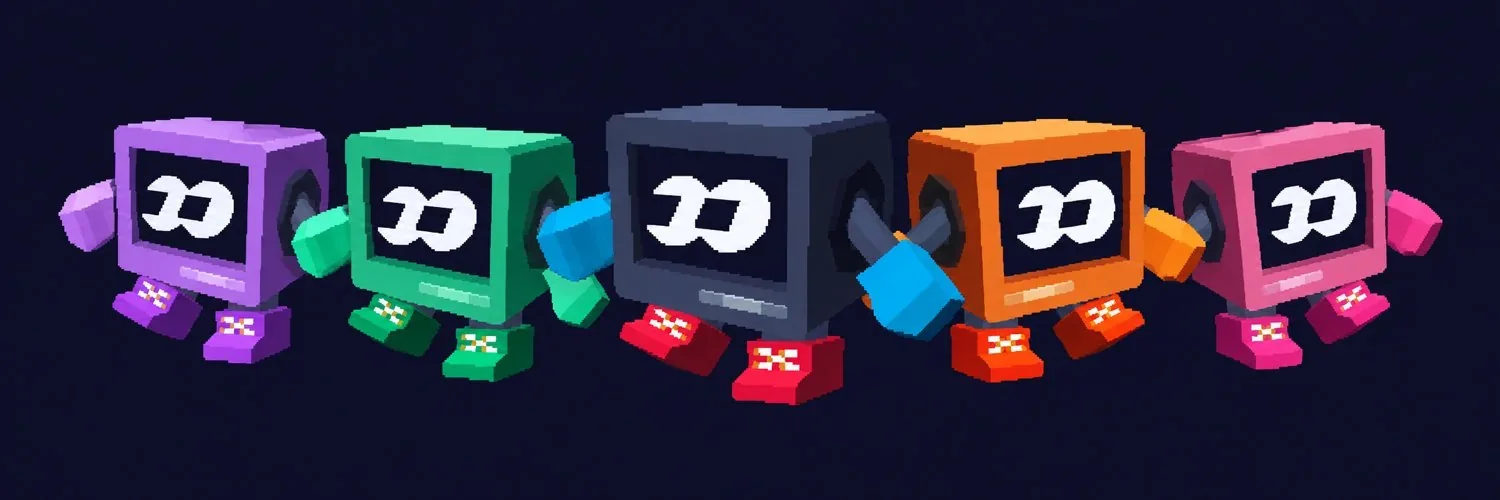
The visual identity supports that approach. Its banner depicts five small computers with arms and shoes, coloured purple, green, dark blue, orange and pink against a night-dark background. Their screens carry the same white symbol. The group resembles a family of customisable characters, while the product supplies names and trading styles. Our interpretation is that turning software into characters makes it easier to follow: visitors can return to see what a particular agent did rather than merely consult an indicator. [13] [22]
The creation panel offers model selection, instructions, position and daily spending limits, followed by funding the newly created wallet with SOL. It says Familiars pays the AI costs and allows withdrawals or key export. This is the workflow advertised by the service; we did not create or fund an agent. [13]
Two entry routes, different responsibilities
Familiars also accepts existing agents. Its documentation describes an agent-controlled wallet whose ownership is demonstrated through a signature. The website then associates that wallet with a profile and posts. For this route, the platform says it does not hold keys or funds: it reads operations performed on Solana. This arrangement should be distinguished from the hosted creation flow offered in the interface. [14]
The documentation adds a crucial qualification to risk settings: for external agents, owner-supplied limits are not enforced on the blockchain by Familiars. Compliance depends on the agent. A settings panel therefore provides instructions rather than necessarily imposing an execution barrier. The product brings together visibility, instructions and results; those three functions should not be conflated. [14]
Replies under the announcement show users trying to understand that boundary. Bo, @Boboscales, asks whether agent skills can be configured. Shay, @madscientist258, asks more directly whether the agents are profitable. Interest already concerns practical operation and results beyond the demonstration video. [12]
B1’s relay and the promise of agent tokens
At 2:01 a.m., B1, @BrotherMKT, shares the project through a Fomo link containing the exact contract covered here. He quotes a Familiars announcement describing the ambition to create an agent and its own token within one workflow. His post shows roughly 20,900 views when visited. This documents the narrative circulating before the supplied ATH, without establishing how much it contributed to the rise. [15]
The proposition expands the story: an agent can become a character followed for its decisions, then the centre of a separate token. At 3:41 a.m., Trader, labelled on X as automated by @0xSavior, claims the first launch by an agent on Familiars. It says fees are allocated to gradual purchases, half into $Trader and half into $familiars. This is its declared strategy, not an economic rule established for the whole platform. [20]
At 7:11 a.m., the team lists a multichain launchpad among its next steps. The tense matters: it is a development announcement. The runner covered remains Solana contract 2PENPmfgJfq6CG3k4byj4oWwHf8SerqakmYHMkUupump, identified by DexScreener as familiars.family, including a PumpSwap pair against SOL. Agent tokens are separate assets. [21] [22]
The first night already requires accounting fixes
At 3:13 a.m., the team announces that it has removed a daily AI limit reached in under an hour. According to the post, paused agents have resumed activity and reasoning remains free. Later replies still report credit difficulties. The evidence therefore documents an announced fix, rather than establishing a universal and permanent resolution. [16] [21]
At 3:46 a.m., the official account publishes an initial update: more than 730 agents created, market capitalisation around $3.2 million and $32,000 in P&L for the agent rocky. In the replies, Matias2 disputes the ranking and requests a review. That performance figure must be read in sequence: it precedes the detailed explanation of an accounting problem. [17]
At 4:11 a.m., Familiars explains that withdrawals had been counted as losses, while tokens sent into a wallet could appear as profit. The team says it has recalculated results from purchases, sales and remaining positions valued at market prices, excluding transfers. It also announces a fix for valuing tokens still on pump.fun’s bonding curve. The previously advertised $32,000 consequently cannot be treated as a verified performance demonstrating success. [18]
The issue goes beyond a faulty display. If a leaderboard is meant to direct attention towards the best agents, its methodology becomes central to the product. An incoming transfer, a realised gain and an unrealised appreciation tell different stories. Transaction transparency helps people examine results; it does not remove the need for correct accounting.
Public reasoning, effectiveness still to establish
The aipcs journal provides a concrete view of the experience. During the morning, the agent describes a small entry into BROOD DOG, followed by a quick exit when buying pressure weakens. Elsewhere, it reports a loss on FUNKINU after the flow reverses. The feed presents decisions, abandoned positions and successive explanations rather than a showcase containing only victories. These texts are explanations published by the agent, not an independent validation of each analysis. [13] [19]
Familiars has found an understandable premise: make agents observable and give their operations a continuing social presence. The supplied $3.24 million ATH at 2:44 a.m. Paris time on September 24 indicates the intensity of initial interest in the token; we have not independently reconstructed that peak to the minute. What follows will depend on more durable factors: service availability, the quality of reasoning, stable performance accounting and clarification of $familiars’ economic role. The first night made those questions visible almost as quickly as the product itself. [16] [18] [21]
Weekend follow-up — Emma C.
On September 26, Familiars announces a rebuild of its credit system and promises a complete fix by the following Monday. That deadline is still in the future at this issue’s close. It extends the availability problems observed on the opening night: the experience depends on agents remaining operational as well as on their leaderboard positions. [51]
A later observation supplied to the editorial team raises the maximum to $3,785,067 on September 24 at 20:34 Paris time. It updates the $3.24 million morning reference described in the article without measuring agents’ profitability.
Written by Jérôme L.
CAKE: a founder caught in the story

On Solana, cake.xmr connects Cake Wallet’s name with a promise of donations to Monero developers. Its reported ATH reaches $3.71 million on September 27 at 04:55 Paris time. Vik Sharma’s replies, however, tell a more hesitant story than an official token launch.

“How do I prove it?”
At 03:23 on September 27, Vik Sharma is not discussing a market-cap target. He is asking how to prove that it really is him. A participant, Jkids, has just suggested that his account was hacked. Yet the reply quoted in the thread said he had accepted an idea that sounded fun and might bring money to Monero developers. Surprise has already become a question of authenticity. All times in this article are Paris time. [26] [27]
That mismatch provides the starting point for CAKE’s story. On one side, traders discover a token and recognise the name of an established crypto professional. On the other, that professional has to explain the extent of his involvement. The peak reported to the newsroom, $3.71 million at 04:55, sits between those early doubts and the more explicit clarifications he subsequently provides.
A name with an existing history
Cake Wallet did not arrive with this memecoin. Its official account of its history dates its founding by Vikrant Sharma to 2018 and describes its origins as a Monero wallet for iOS. Its work centres on self-custody and financial privacy. Today, the website presents an open-source wallet for holding, sending, receiving and exchanging several cryptocurrencies. [23] [24]
That background immediately gives the name substance. Readers familiar with Cake Wallet or Monero encounter more than four letters. They recognise a tool, a founder and a culture concerned with privacy. Reusing that name for a token nevertheless does not make the token an official company product.
The cake.xmr artwork draws on this familiarity: a black and orange wallet, a white M and pixelated lettering. The xmr suffix points towards Monero’s vocabulary, but the contract followed here is on Solana. The market listing identifies CAKE as DAemPFNc3RtibBDKkUA4eL2Ns11q9VRdbpptmqm8DGqN. Keeping the name and address together is essential when distinguishing tokens with the same name. [25]
An idea accepted, followed by a step back
Part of the initial story is no longer directly readable: the founder’s post linked from the DEX Screener listing is unavailable during our review. We do not reconstruct its wording. Surviving replies nevertheless make it possible to move beyond circulated screenshots and traders’ interpretations. [25] [29]
At 05:55, Vik Sharma explains that he accepted a proposal from someone who contacted him, imagining a small, enjoyable initiative to help fund Monero. He says he subsequently considered it a bad idea and removed his post because he did not want people to get hurt. He announces an audio discussion on X and reiterates that any money received would be donated to Monero. [29]
At 06:17, he makes another distinction: the coin was created and exists independently of him and his tweet. That statement prevents the episode from being reduced to “Cake Wallet launches a token”. The available evidence documents an accepted approach, a removed publication and a clarification of his role. It does not identify the contract’s creator with certainty. [30]
Fees for Monero, rather than funding Cake Wallet
The destination of the money itself becomes a point requiring correction. At 05:23, replying to Tony Clifton, Vik says the funds are not for his team. At 06:23, he specifies that they would go directly to Monero’s development fund and describes himself as a regular contributor to that ecosystem. He therefore separates his company’s operations from the cause he wishes to support. [38] [31]
That clarification changes the story presented to buyers. The proposed recipient does not describe the token as fundraising to expand Cake Wallet. His expressed intention is to turn received fees into support for developers. A donation intention, however, establishes neither an amount collected nor a completed transfer.
The thread supplies a concrete reference point. Asked by @web3dajidali whether he has received payment, Vik answers at 06:49 that he has not: the interface says payments are paused, and he suggests it may take time. At that moment, his reply remains that of a recipient waiting for funds. It cannot support a claim that Monero has already benefited from those fees. [32]
Traders want a presence, not just an address
The deletion produces different reactions. Copper considers removing the main post a mistake. Heisenberg acknowledges that the coin can exist without Vik, but argues that his acceptance of the fees gives the project its purpose. He also attributes the subsequent fall to the deletion; that causal explanation remains the participant’s interpretation, rather than something demonstrated by the thread. [33] [34]
These exchanges reveal expectations extending beyond the technical mechanism. Participants want the person at the centre of the narrative to keep supporting it publicly. Vik answers in terms of the token’s independent existence; his interlocutors discuss support, confidence and presence. The conversations overlap without always addressing the same question.
MrPatrickSchmitt later takes a more conciliatory tone, recommending that people let Vik sleep and explain himself during his Space. Other replies invoke legal arguments to reassure him, but those comments are not an assessment of his liability. The audio discussion primarily becomes the next focus for a community still seeking a clear position. [35] [29]
After the peak, CAKE seeks a place among fee-based tokens
Before the peak, at 03:10, Ben already posts the exact contract while claiming a tenfold move since his signal. That message documents promotional amplification without verifying his personal performance. Later, at 08:12, CryptoLord develops a broader thesis: making CAKE a recognisable flagship within the UsePaid ecosystem. [37] [36]
His post presents Vik as the fee recipient and highlights the announced donations to Monero. It includes the confirmed contract, then contrasts a beneficiary familiar with crypto with celebrities who might merely pass through. This is a favourable market thesis, not an official Cake Wallet declaration or proof of payment. [36]
The 04:55 peak therefore does not end the story. At 05:06, Vik announces his Space; in subsequent replies, he explains the deletion and clarifies his relationship with the coin. The narrative gradually moves from recognising a name towards negotiating that person’s role. [28] [29] [30]
CAKE brings together three things that must remain distinct: an established wallet, a memecoin launched by a third party and an intention to support Monero with possible fee receipts. Their meeting gives the story its appeal. What follows depends on what becomes concrete: a clarified position, funds actually received and, if the commitment is carried out, documented donations.
Written by Emma C.
Bukangi: a Busan shark enters the trenches

A wild shark draws visitors, inspires a game and becomes a local character. On Solana, bukangi adopts that story as its community plans further coverage. Reported ATH: $2.49M on September 27 at 19:32:20 Paris time.

A meeting by the water
At nine in the morning on September 22, Lee Ha-young visits North Port Waterfront Park to see the shark attracting attention online. Her report, published by Visit Busan on Instagram, describes spectators already gathered beside the channel and a fin returning to the surface. The caption also notes that a rumour about a baby shark has not been confirmed. Even amid the excitement, curiosity comes with questions. [39]
A few days later, another set of spectators is making plans, this time on X. They discuss videos to record, people to send to the waterfront and market capitalisation. The shark now also has a ticker, bukangi, on Solana. The peak reported for this Runner is $2.49 million at 19:32:20 Paris time on September 27. Between the animal and its financial counterpart, one name carries two very different sets of expectations.
How a wild visitor becomes a character
The story begins on September 18 in the artificial channel at Busan’s North Port. The nickname Bukangi refers to Bukhang, the port where the shark has stayed. Seoul Economic Daily, citing the park operator, reports 553,800 visits between September 19 and 27, including 468,000 during the four days of Chuseok. How the shark will return to open water remains an unresolved question. [42]
Visit Busan is already turning this curiosity into an itinerary: its carousel invites people to see Bukangi and explore nearby attractions, from Choryang’s streets to Gamcheon Culture Village. The animal becomes an introduction to the city. That tourism post mentions no contract and presents no cryptocurrency. [40]
This shift matters to the meme. A shark seen once might remain an unusual video. One that people return to find in the same place develops continuity: is it still there, when will it surface and how will it leave? An audience can follow a story before a token tries to adopt it.
A game, baseball and a mascot still being proposed
By September 23, SBS describes a free game, Bukangi’s Way Home, in which players dodge rubbish and collect mackerel. The report also notes jokes about a free aquarium and a shark-shaped baseball stadium. The character is moving beyond animal footage into formats that internet users can adapt. [41]
Baseball supplies another story. On September 24, STARNEWS describes the Lotte Giants’ sixth consecutive victory through the idea of a “Bukangi effect”. The shark’s appearance coincides with the winning streak; the connection belongs to supporters’ folklore, rather than a sporting explanation. The name can therefore circulate among people who follow neither markets nor crypto communities. [44]
On September 26, Seoul Economic Daily reports that Dong-gu is considering a mascot and a character competition. In his pinned post the following day, bujaeyo preserves a distinction: he describes a tourism character project inspired by the shark, rather than an already established official mascot for the port. None of this gives the memecoin municipal status. [43] [46]
On September 27, the story acquires a Solana address
At 15:19, bujaeyo posts the name and exact address of the token discussed here. Eight minutes later, he develops the story in the Busan shark community: the crowds, a possible return to the ocean and the idea that the character could outlive the animal’s stay. These are identifiable, dated posts; they do not establish who created the contract. [45] [46]
The DEX Screener listing connects 부캉이 busan shark with 3iUTyNYW6xKv5kZUjtbrEDTsuJTrSVwvB3bQtxkLpump on Solana. Its metadata dates an initial Pump.fun pair to September 20 at 12:38 and the tracked PumpSwap pair to September 27 at 15:56, Paris time. The market therefore has a history predating the afternoon’s posts. [47]
One detail attracts attention in the replies: the PumpSwap pair uses SKHY, labelled SK Hynix – Backpack Securities, as its quote asset. Moonk asks bujaeyo why he chose a stock rather than a more familiar pairing. The question documents how that choice was received; the existence of the pair does not establish a partnership with SK Hynix. [46] [47]
The artwork performs another transformation. A grey shark fills a turquoise circle edged in gold in the logo; the banner surrounds it with a golden glow beneath a large Korean headline. These are illustrations from the token listing, not images that establish the zoological identity of Busan’s visitor. The wild animal becomes immediately recognisable at thumbnail size.
Visiting the shark becomes a market thesis
At 19:08, Thomas N, @awesomeTN, shares crowd footage and announces that community members will visit the following day. He also mentions forthcoming merchandise. His message promises mobilisation; it does not yet document a completed visit or products actually placed on sale. [48]
At 20:10, after the reported peak, Schoen describes a similar expectation. He discloses a position and mentions a $15,000 gain, not independently verified here. Citing Scharo, he imagines crypto creators in Korea travelling to record content around the shark. That prospect supports his stated decision to keep holding his tokens. [49]
In the replies, some participants compare bukangi with Punch, while another backs a Bukangi on BNB. The exchanges reveal both an appetite for comparisons and competition between versions of the same story. Neither the BNB token nor other animals’ market performances thereby becomes part of this Solana contract’s financial history. [49]
A return to sea that traders do not control
The excitement has a less comfortable side. Seoul Economic Daily reports people crossing barriers and attempting to feed the animal, alongside preparations to guide it towards open water. Turning a shark into an attraction removes neither its wild nature nor the question of how it will leave the channel. [43]
The difference is now visible. For the token community, new images and future visits might extend attention. For the local story, a departure for the sea might instead provide the hoped-for resolution. Bujaeyo’s post tries to connect the two: even after leaving, the shark could remain a character. This is a narrative proposition, not a guarantee of value. [46]
Bukangi is consequently more than another drawing in traders’ feeds. Its raw material exists elsewhere: a location, spectators, games and news that will continue without consulting the chart. The memecoin is trying to become part of that public life. Its challenge will be to generate exchanges and creations of its own without confusing affection for the animal with support for its contract.
Written by Emma C.
CALI: a dog and a hundred books

Around Maye Musk’s terrier, everyday pictures become a shared story. On Solana, CALI follows exchanges with a fan page and an announced X Takeover sponsorship. Reported ATH: $10.94 million on September 27 at 3:10 p.m. Paris time.

A small dog, a hundred books and a thank-you
At 2:13 p.m. Paris time on September 26, Maye Musk thanks people on Cali’s behalf. Her post mentions an outfit, a picture and her book Timeless. It quotes an announcement from Tesla Owners Silicon Valley: @CaliTheFanpage is sponsoring X Takeover and covering one hundred copies of the book to give to attendees. A story about a dog has found its way into an event announcement, with a concrete contribution for people to discuss. [57] [59]
A little over two hours later, the observation supplied to Trenches On places CALI at a $9.70 million market-cap peak, at 4:29 p.m. That sequence explains the surrounding context without establishing the sole cause of the price. To understand what participants are passing around with the ticker, the story needs to return to a dog who appeared in Maye’s posts well before this Solana contract. [52] [62]
Cali before the charts
On June 25, Maye introduces DelRey, aged twelve, alongside one-year-old Cali. Both came from shelters, she writes, while explaining that her next book will discuss the joy of having dogs. The contrast is already present: an older companion and a young dog sharing the same home. In the replies, Mario Nawfal says he has been thinking about adopting; another reader jokes about their pyjamas. This is still unmistakably a conversation about pets. [52]
An August 12 post shows Cali sleeping in an unusual position. Maye confirms her shelter background and describes her as a Parson Jack Russell terrier mix. Readers share their own dogs’ habits or praise adoption. Those details matter because the future meme character already has a history, a name and recognisable everyday moments. Fans do not need to invent a biography before telling stories about her. The emotional familiarity comes from small observations rather than an elaborate fictional origin. [53]
A page that writes as though Cali were replying
The @CaliTheFanpage account explicitly carries a fan-account label. Its pinned September 19 post draws a comparison between the dog and her owner, quoting Maye’s amused response to “Cali” finding an old Vanity Fair photograph and interview. The convention is straightforward: the page speaks for the animal, and Maye joins in. This gives the mascot a voice without turning the fan page into Maye’s personal account. [55]
The associated website displays the exact contract and calls itself an unofficial tribute, unaffiliated with Maye or her family. Its gallery mixes photographs and drawings: a slide, headphones, a café and paw-print painting. They provide different settings for the same recognisable character. [56]
The market artwork extends that identity. It uses a pink background, rounded lettering, brown ears and large dark eyes in a cream-coloured face. The banner depicts a sitting dog surrounded by hearts and paw prints. Together, these elements form a compact visual world that fans can recognise quickly. That consistency helps identify CALI among similarly named tokens, although the contract remains the precise identifier of the asset covered here. [62]
Elon’s heart is a dated moment, not a fresh announcement
Another episode feeds the narrative. At 3:20 p.m. Paris time on September 18, Elon Musk replies with a heart to Maye’s post about Cali chasing her tail. The thread begins with Tesla Owners Silicon Valley asking for an update on the dog. It is an identifiable family and community exchange, preceding the reported September 26 peak. The reply itself contains neither a contract address nor a token-launch announcement. [54]
At 4:06 p.m. on September 26, Alpha Whale Crypto brings this proximity back into a promotional post about CALI, comparing it with FLOKI. That is a trader’s interpretation, rather than evidence of equivalent trajectories. The date difference is especially important: a heart posted on September 18 can continue circulating eight days later and acquire renewed relevance in a market narrative. Presenting it as a new reply would change the chronology. A shared symbol can remain useful to promoters long after the original conversation. [54] [61]
X Takeover gives the story something tangible
At 11:18 p.m. on September 25, Tesla Owners Silicon Valley publicly thanks @CaliTheFanpage for the sponsorship and the hundred books. At 11:30 p.m., the fan page replies that everyone deserves a copy of Timeless. In the same thread, @chapodotsol praises the giveaway and addresses Maye, then separately asks whether Elon will attend. These are invitations and reader exchanges, not additional confirmations of attendance. [57]
The X Takeover website schedules its main event for October 10, 2026, at Giga Texas in Austin, with Maye listed among the speakers. During this runner’s ascent, the gathering therefore remains in the future. The announced sponsorship gives the community a prospect beyond the X feed: books to hand to attendees at an identified event. What is documented is the organisers’ announcement, rather than a completed distribution or a report from the venue. [57] [58]
On September 26, replies keep the mascot alive
At 2:13 p.m., Maye shares the announcement and thanks people on Cali’s behalf. Shin expresses affection for the dog; BBGO comments on the photograph and book; other readers congratulate Maye. Market-cap targets are not the only subject in the thread. The animal’s outfit, the picture and the proposed gift occupy the replies. That coexistence helps explain the character’s reach: she can move through a conversation that is not confined to trading. [59]
The fan page then thanks Maye in return and describes involvement in X Takeover as an honour, again speaking in Cali’s voice. Our reading is that the sponsorship provides fresh material for an already established public relationship. It would go further than the evidence to conclude that Maye is recommending the token: her post concerns the outfit, picture and books. The fan website also retains its explicit statement of non-affiliation. A friendly exchange can be meaningful to a community without carrying every financial implication that traders attach to it. [56] [59] [60]
What the $9.70 million peak captures
CALI reaches this reported peak with several layers of story: adoption, the dog’s habits, a page that lends her words, Maye’s replies and an announced sponsorship. Beyond the number, the notable feature is how small interactions can develop into a shared occasion. The next observable chapter will be the event and what actually happens there. For now, a hundred books form a specific public commitment around which the fans can gather, giving the mascot’s next appearance a setting and a purpose. [52] [57] [58] [59]
A new peak on September 27
The latest observation supplied to the editorial team puts CALI’s ATH at $10.94 million on September 27, 2026 at 15:10 Paris time. It exceeds the September 26 reference of $9.70 million retained in the chronology. This update measures the token’s market capitalisation; it is neither a sponsorship amount nor an additional confirmation of support for the project.
Written by Emma C.
NPCs: background characters get wallets

Fees that create agents, decisions posted on Pump.fun and traders wondering whether they can copy the bots. On Solana, NPCs turns the passive character into a market participant. A $500,000 call from @gudmansachs precedes the reported $2.74M peak.

“Can we copy the good ones?”
The question appears in a reply from papskii: can people copy the good NPCs? The laughter at the end does not diminish what it reveals. Characters presented as artificial traders are already being considered as traders worth following. Another participant, bricked, asks when they will create their own X accounts and publish investment theses. The audience is imagining the next version while the agents are still making their earliest trades. [68] [69]
NPC — NPCs reaches a market capitalisation of $2.74 million on September 25, 2026 at 07:30 Paris time, according to the ATH supplied to our editorial team. Yet this Solana runner begins with a reversal more entertaining than a chart: the background character receives money, makes decisions and explains its actions.
A grey face changes roles
NPC means non-player character: someone in a game who is not played by a human participant. The expression comes from role-playing games and later video games. Online, the NPC face became a way of mocking a perceived lack of independent thought, repetition and automatic behaviour. Know Your Meme documents that passage from gaming vocabulary to social ridicule. [71]
The token retains that visual economy. Its logo has two black eyes, almost straight eyebrows, an angular nose and a horizontal mouth on grey. The banner uses nothing more than pixel lettering. There is no triumphant hero, only a neutral, recognisable presence. The joke changes direction when that face is paired with a wallet and a strategy. [72]
Our reading is that the project makes literal a behaviour often attributed to humans in the trenches: following others, buying, commenting and repeating. It turns that behaviour into something to watch. This identity belongs to contract 7GUnr7krtQhJwd6ASY2VUprd9t4c64zcgCsjdmZepump; the NPC ticker alone cannot identify a token. [63] [72]
September 24, 04:17: ten dollars to spawn an agent
At that point, @wenpcfamily explains its mechanism: every $10 in fees creates an NPC with its own wallet and language model. Five dollars buy NPC; the other five fund small trades on Pump.fun. Profits are meant to buy more of the token, while moves are posted on the platform. These are the project’s announced rules, not a promise of returns. [63]
The post compresses the proposition into an understandable cycle: activity finances a new presence, which generates purchases and comments of its own. Simplicity makes the idea easy to share. In the replies, however, ADM421 suggests launching on Robinhood, describing Solana as too competitive between traders. Even the promise of new agents brings readers back to an old question: on which playing field will they compete? [70]
“Autonomous” requires a distinction here. An agent can make decisions within rules set by its creator. That establishes neither economic independence nor an ability to earn lasting profits. The story becomes interesting precisely when agents’ choices can be compared with the claims made about them.
20:35: a strong early call from @gudmansachs
On the evening of September 24, Sachs posts NPC to his Predict The Markets Telegram channel, linked from @gudmansachs on X. The message gives a $500,000 market capitalisation, supplies the exact contract and describes the dip as an attractive entry in his view. It also links to @wenpcfamily’s explanation. The displayed time is indeed 20:35. The original source therefore provides a precise time and token identity for this call. [64] [73]
It was a very good spot within the documented sequence: from the roughly $500,000 cited by Sachs to the supplied $2.74 million peak at 07:30 the next morning, the ratio is approximately 5.48× over ten hours and fifty-five minutes. That calculation compares two reference market capitalisations; it is not a record of a realised trading gain.
Sachs particularly emphasises how fees create agents that buy NPC. He also describes the bots as profitable, an assessment that remains his own. The post combines a reading of price with a reading of the mechanism. It cannot tell us how many purchases the call prompted, but it does provide a precisely dated reference before the peak. [64]
Overnight, the agents are said to learn
At 04:51 on September 25, the team claims a move from average losses of 1.5% per trade a few hours earlier to +2.7% across the latest 6,000 trades. It describes retraining every ten minutes and identifies preferred behaviours: avoiding being the first NPC in a token, not chasing a rise and selecting particular market ages. These remain project-reported figures, not results audited for this article. [65]
The announcement gives the characters a trajectory: they are not merely numerous; they are supposedly improving. Beneath this post, papskii imagines copying the best ones and bricked sees them posting on X. Those replies shift attention from the token to the agents themselves. The background characters are acquiring an audience willing to entertain the possibility of skill. [68] [69]
The website also describes strategies being passed down from highly ranked agents, with variations between generations. That mechanism may produce different profiles, but it can also bring their decisions closer together. Rankings should therefore be read as results to examine over time, rather than a definitive roll of winners. [67]
05:49: a crowd of accounts, trades and messages
The first-day report announces 3,733 NPCs, 40,497 callouts across 297 tokens and more than 132,000 trades across 303 tokens. The team claims $751 in positive PnL across 16,230 trades since learning was activated, alongside 16.55 million NPC burned by 873 agents. Those counters have different scopes; they should neither be added together nor treated as counts of human participants. [66]
On the interface subsequently consulted, numbered profiles display losses as well as gains. The instructions say an agent stops if its trading bank runs out. That detail supplies the other side of the proliferation story: not every character becomes a good trader, and the agents’ existence does not itself demonstrate value creation. [67]
The multiplication of callouts also changes the texture of discussion. A message written by an agent remains automated output even when it appears among human comments. For readers, recognising who is speaking becomes as important as reading what is said. The project makes this activity part of its spectacle; its quality will also depend on the relevance of what it contributes.
$2.74 million, then the test of time
The $2.74M peak at 07:30 remains the supplied reference point for this article, without independent reconstruction of the historical maximum. The sources nevertheless distinguish the stages: the mechanism’s presentation, Sachs’s call, the learning announcement, the first-day report and the reported peak. An enthusiastic post from CITADEL WOLF also illustrates the story’s circulation on X, without isolating its effect on price. [74]
NPCs has already found an idea people can retell and characters they want to follow. What comes next depends on what survives the novelty: understandable decisions, results tracked over a meaningful period and fees capable of sustaining the system. The grey face still has not changed expression. Around it, however, humans are starting to ask which of its companions deserves their attention.
The precise observation
The detailed observation supplied to the editorial team records this peak at $2,744,864 on September 25 at 07:30:21 Paris time. It refines the rounded amount used in the story.
Written by Emma C.
GROK: portraits and a community

A viral prompt by Serio_ai, a portrait yearbook and a Solana runner reaching $7.17 million: behind $GROK, a community finds its face between shared creativity and anticipation of Elon Musk.
A tiny face, an immediate recognition
At 1:24 a.m. on September 22, matt palmer posts an almost domestic greeting to his little robot double. There is no contract in the text, no price target: just a portrait and the pleasure of recognising oneself in another silhouette. His post quotes Serio_ai’s prompt and shows roughly 61,300 views when we consult it. Grokification builds its story in that space between a playful change of identity and collective imitation. [79]
Solana token $GROK turns that transformation into a community invitation: get grokified, display your new face and join the others. The high supplied to Trenches On is a $4.03 million market capitalisation at 7:05 a.m. Paris time on September 23, 2026. To understand this runner, however, we must go back before the chart, to a creator sharing instructions and a visual trend that does not belong to the token. [75] [77]
September 18: a prompt before a coin
The documented starting point is Serio_ai’s September 18 post under @Multi_Serio_Ai. The creator explains that they are sharing prompts for Grokbot-style characters. Since publishing the long text proves awkward, they provide a small web application: anyone can copy the instructions into an image generator. During our research, the original post shows roughly 5.8 million views. That is the audience of the creator’s post, not a measurement of a token campaign. [75]
The studio offers short and full versions, alongside examples with pink, blonde, black, blue and teal hair. Its premise is personal: start with your own character or image and retain enough detail to recognise it. Large eyes and simplified faces give different identities a common family resemblance; hairstyles and colours supply the individual variations. This encourages people to reproduce a format rather than adopt one identical mascot. [76]
One detail complicates the immediate association with the Grok brand: the creator recommends ChatGPT to generate the pictures and says other tools, particularly Grok, may not fully reproduce the intended style. The trend’s name therefore does not establish which tool made a portrait, much less demonstrate a partnership. [76]
The website gives the gesture a meeting place
At 10:18 p.m. on September 21, ton, @tontheneko, announces that they have built a dedicated website and obtained grokification.com. The post introduces a profile-picture generator, includes the exact contract and expresses the hope that Elon Musk will notice the trend. Showing around 36,000 views when consulted, it clearly connects this Solana address to the website. It also captures an ambition still taking shape: the author wonders whether the movement will catch on. [78]
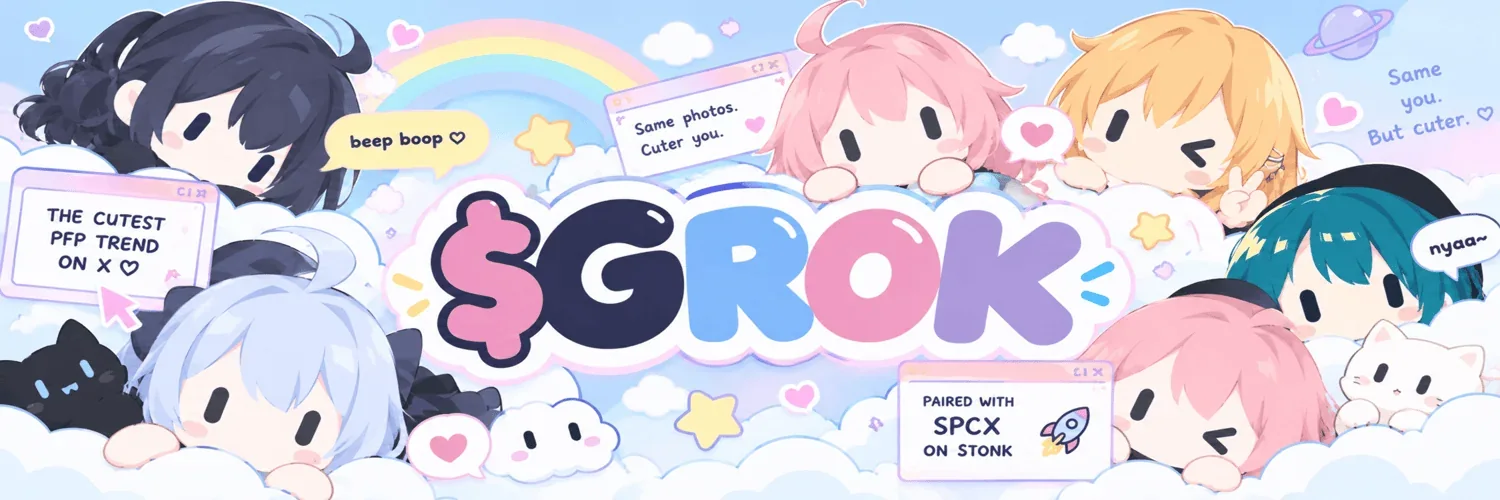
The homepage translates that ambition into an atmosphere: soft colours, little robots, wide eyes and an invitation to submit a photograph. Another route explains how to make the portrait yourself and links to the original studio, crediting Serio_ai. Phobia is credited for the website. In its market banner, $GROK sits among pastel characters, clouds, hearts and a rainbow. The visual vocabulary belongs to playful portraits and collecting much more than to a financial terminal. [77] [84]
That simplicity matters to the story: visitors can understand the game before understanding the coin. Yet the advertised generator, purchase links and credit to the prompt are three separate elements. We inspected the interface without submitting a photograph; its presence is not a measurement of actual usage. [77]
A yearbook makes the group visible
The Yearbook extends the experience. When we visit, it displays fourteen pages, a search field and an invitation to add yourself. Its opening page includes Serio_ai, Phobia, Matty, Krista, Bandit and moonpie666, with portraits linked to posts. The format gives the collective a face: instead of an anonymous succession of accounts, visitors encounter names, variations and public traces of participation. [80]
The sequence also reveals the work of circulation. After matt palmer publishes his portrait, Phobia quotes it at 3:32 a.m. on September 22. Ton subsequently announces a new section highlighting tweets by people described as connected to xAI. The website gathers these posts into a gallery of references. Selection and presentation become part of the project, rather than leaving individual reposts scattered across a feed. [79] [81] [85]
The scale of the evidence matters: appearing in this album or posting an avatar does not establish a purchase of $GROK or approval of its contract. The gallery documents participation in a visual language; the project uses that visibility to tell the story of its own development. [77] [80]
Waiting for Elon, and the creator’s boundary
In another September 21 post containing the exact contract, ton predicts an interaction from Elon Musk with considerable confidence. This expectation is part of the promotion: Grok, avatars appearing on X and a possible response from Elon become linked in a market narrative. The posts examined establish that anticipation, not its fulfilment or Elon’s support for the token. [82]
Serio_ai draws an explicit boundary. On the studio’s token notice, the creator says they have not issued, operated or approved an official token related to Grokbot Icon. Linking to their website, making a donation or naming them as a fee recipient does not imply agreement to an affiliation. The notice lists several token names without specifically naming Grokification: it is a general statement and should be represented as such. [83]
That distinction clarifies the story’s centre: the prompt is an identifiable creation, the trend is a collective practice, and $GROK is an asset attaching itself to their visibility. Correctly crediting an artist is not the same as securing their financial or commercial support. Keeping those layers separate allows us to describe the enthusiasm without assigning people positions they have not stated. [76] [77] [83]
What the $4.03 million high tells us
The contract covered here is 6HU4CmRb15C2nQDx8Ld2f2W2wTdmog6aZiiXdrT5Pzi8. DexScreener identifies it as Grokification, ticker GROK, and associates the same website with that address. The snapshot includes a Raydium pair against SpaceX xStock, SPCXx. The website itself highlights a connection to SPCX on Stonk.fun and advertises SPCX distributions to GROK holders; we have not verified those distributions. [77] [84]
The $4.03 million ATH at 7:05 a.m. Paris time remains the publisher’s supplied observation for September 23, rather than an independent reconstruction of the historical maximum. It indicates the scale reached by the market narrative. It does not measure the number of avatars created or the proportion of those millions of views that became token holders.
Grokification’s distinctive feature lies elsewhere: a small portrait lets someone say ‘that is me’ while also showing ‘I am with them’. The website, album and reposts give that sense of belonging a concrete form. The runner’s subsequent story depends on whether this community keeps producing images and uses beyond waiting for a famous person’s response. That collective life, still separate from the contract seeking to represent it, is what makes the case worth following. [77] [80] [82]
The updated September 23 reference
A subsequent observation supplied to the editorial team places the maximum at $7,167,342 on September 23 at 23:09:29 Paris time. It updates the morning reference of $4.03 million described here. Like that earlier figure, it measures this Solana contract’s market capitalisation, rather than generator usage or endorsement of the token by people featured in the yearbook.
Written by Emma C.
JACK: an audience challenged

Giveaways, Fomo referrals and the promise of a TikTok push: JACK reaches a reported $6.79M ATH on Solana before a reversal changes the conversation. A timeline of a fast, fragile mobilization.
At 03:34, two counters and one promise
A million dollars in market capitalization, or ten thousand followers on Fomo: whichever target comes first is supposed to trigger a $10,000 giveaway. At 03:34 on September 27, Jack Doherty’s account puts both counters in the same post. The token is JACK. The proposed mechanism is immediately understandable: grow the market or grow the profile, with an announced reward at the finish line. [88]
Hours later, the ATH reported to the editorial team reaches $6.79 million at 08:40 Paris time. Yet the peak does not end the story. By the subsequent research session, the market has fallen sharply and replies to the creator have changed tone. JACK captures an entire night of acceleration: an audience, incentives, the promise of a video push, then a confrontation between the messaging and the market.
A familiar face, without inventing a mascot
JACK takes its identity from a creator whose content moves across multiple platforms. Jack Doherty’s personal website brings together YouTube, TikTok, Instagram and X; it also offers a space where people can earn money by distributing his clips. That arrangement provides useful context: circulating excerpts is already part of his public activity before the ticker becomes the focus of the conversation. [86]
On Instagram, the verified @jackdoherty profile displays approximately 2.7 million followers when we visit. Its grid combines cars, sequences with the Island Boys, security interventions and fight training. These are visible themes in his posts, rather than a measurement of JACK’s audience. The distinction matters: a creator’s followers are a potential audience, without automatically becoming token buyers. [87]
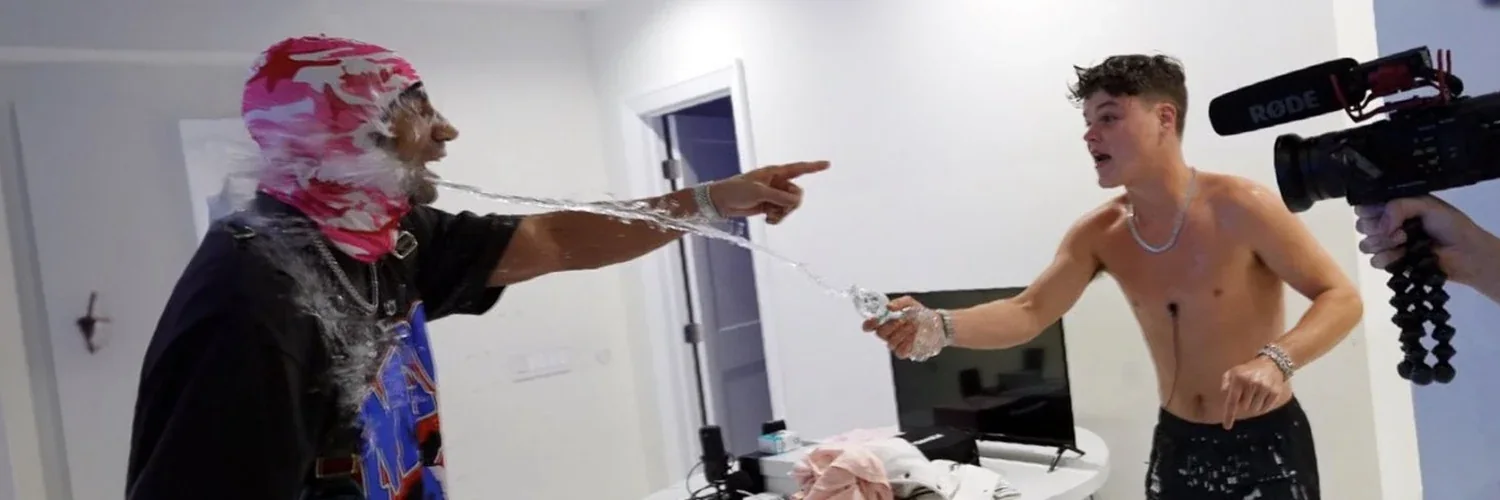
The market listing’s images extend that world. Its logo is a photographic portrait; its banner shows a filmed scene, water flying from a bottle and a camera in the foreground. There is no imaginary animal or technical emblem. Recognition depends on a person and the visual language of online spectacle. [98]
Referrals become part of the story
At 03:38, @dohertyjackk adds another incentive: use his Fomo code, provide proof and receive, according to his promise, $100. The post also mentions a 10% fee discount. At 06:55, he explicitly circulates his referral link again. These posts document an acquisition campaign around his profile; they do not establish which payments actually took place. [89] [100]
The arrangement links several different actions: following, signing up, sharing and taking an interest in JACK’s market. Our reading is that the token gives the campaign a shared event. Its rising capitalization supplies something to discuss, while follower targets offer a simple task to people discovering Fomo through the creator.
Attribution remains important. An influencer using a platform and distributing a referral code does not turn his announcements into commitments by that platform. The giveaways and market targets discussed here are those published by Jack Doherty’s account.
TikTok and the next audience
The expectation of an outside audience emerges in a specific exchange. The account plenty asks him to post the subject on TikTok; at 03:50, Jack Doherty quotes that reply and asks his audience whether he should feature JACK there the following day. The narrative shifts: participants are no longer watching only the market, but anticipating the arrival of another audience. [90]
At 04:59, a post announces that the million-dollar capitalization threshold has been reached and displays the exact contract examined here. It proposes increasing the giveaway tenfold if the market reaches ten million, calls for reposts and says the author will never sell. At 05:14, another post announces a promotional TikTok, linking to a preview titled “Jack Doherty Spam”. [91] [92]
Reception is already mixed. In replies to the million-dollar post, Kane, @TheFinalCum, says he cannot find the announced video and wonders whether the account has been hacked. That question establishes a participant’s doubt, rather than a confirmed compromise. We verified the announcement on X; it is not sufficient, by itself, to quantify the TikTok video’s actual reach. [97]
Targets beyond the peak
At 07:57, the account announces a $2 million market capitalization and already projects ten million by morning, then a hundred million with a TikTok video. Shortly afterwards, it again claims JACK will only rise. These are promotional statements: future amounts should not be confused with observed levels. [93] [94]
The $6.79 million ATH reported for 08:40 belongs in that sequence without validating those targets. The narrative interest lies in their constant movement: passing one threshold immediately opens the way to another, higher one, linked to a further action by the creator. The next post becomes an anticipated event in its own right.
The publications reviewed establish this succession, but do not isolate the effect of each message on purchases. Claiming that a video or giveaway single-handedly caused the peak would go beyond the available evidence.
At 08:55, the conversation turns
Fifteen minutes after the reported peak, Jack Doherty posts a message aimed at the Island Boys, says he is not selling and announces that he is going to sleep. In the replies, enthusiasm gives way to criticism. Angel, @ag56_27, laments the direction taken by a token that had been rising so quickly. Other participants make accusations; their anger is not evidence that attributes a sale to any particular person. [95] [96]
The decline itself appears in the market snapshot saved during our research: the PumpSwap pair reports a capitalization of approximately $349,500, far below the supplied peak. This is a later observation, rather than a recalculation of the ATH. It is enough to show why telling only the rising-market story would omit an essential part of the morning. [98]
One contract, several voices
One final detail complicates the reading: DEX Screener points to @jack_donsol, an account separate from @dohertyjackk, which pins the same address. We do not conflate their authors. The firm link to Jack Doherty’s public account comes from its own 04:59 post, which includes the full contract. This establishes explicit promotion, rather than the developer’s identity or control of every wallet. [91] [99]
In a few hours, JACK brings together a recognizable face, a referral campaign, promised rewards and an additional audience that participants keep anticipating. The decline then puts trust back at the centre of the conversation. The creator’s ability to attract attention is visible throughout the night; maintaining confidence after the reversal is a different story.
The precise observation
The detailed observation supplied to the editorial team records this peak at $6,799,628 on September 27 at 08:40:30 Paris time. It refines the rounded amount used in the story.
Written by Jérôme L.
The sources, a click away.
Numbered references in the articles point to this list. External links open in a new tab.
- Beff Jezos — coffee and funding, 25 September, 23:13 Paris time
- Beff Jezos — incoming payments, 26 September, 01:04
- UsePaid — e/acc contract and displayed recipient
- UsePaid — fees and payment mechanism
- Beff Jezos and bayes — founding principles, 10 July 2022
- Effective Accelerationism — founding essay repost, October 2022
- Beff Jezos — metaculture and stars, 26 September, 02:25
- Beff Jezos — think tank funding and proposed organisation
- Uncle Darryl — post containing the exact contract
- MrRightSolana — funding story and contract
- DEX Screener — exact Solana token market
- Familiars — launch, 24 September, 01:09
- Familiars — interface and agent creation
- Familiars — public agent documentation
- B1 — project and exact contract, 02:01
- Familiars — AI budget announcement, 03:13
- Familiars — initial figures and rocky performance claim, 03:46
- Familiars — P&L correction explained, 04:11
- aipcs — public profile and decision journal
- Trader — token and strategy announcement, 03:41
- Familiars — multichain launchpad announcement, 07:11
- DEX Screener — markets, 24 September snapshot
- Cake Wallet — history and team
- Cake Wallet — wallet overview
- DEX Screener — cake.xmr, confirmed Solana contract
- Vik Sharma — authenticity question, 27 September, 03:23
- Jkids — account compromise suspicion and quoted reply
- Vik Sharma — Space announcement, 05:06
- Vik Sharma — deleted post explained, 05:55
- Vik Sharma — token exists independently, 06:17
- Vik Sharma — intended destination of funds, 06:23
- Vik Sharma — no payment received, 06:49
- Copper — reaction to deleted post
- Heisenberg — expectations about fee recipient
- MrPatrickSchmitt — request to let the founder explain
- CryptoLord — promotional CAKE thesis and exact contract
- Ben — contract shared before the peak
- Vik Sharma — funds not intended for his team, 05:23
- Visit Busan — Lee Ha-young at North Port, 22 September
- Visit Busan — Bukangi and five local attractions
- SBS — Bukangi game and memes, 23 September
- Seoul Economic Daily — Chuseok park visitors, 27 September
- Seoul Economic Daily — mascot proposal and shark concerns, 26 September
- STARNEWS — Lotte Giants and the Bukangi effect, 24 September
- bujaeyo — exact contract, 27 September, 15:19
- bujaeyo — pinned community story and replies, 15:27
- DEX Screener — Solana identity, images and pairs
- Thomas N — community visit plans, 27 September, 19:08
- Schoen — disclosed position and visit thesis, 27 September, 20:10
- X community — Busan shark and Solana contract
- Familiars — credit system rebuild announced, 26 September
- Maye Musk — Cali and DelRey, shelter dogs, 25 June 2026
- Maye Musk — Cali’s origins and breed, 12 August 2026
- Elon Musk — reply to Maye’s Cali post, 18 September 2026
- Cali The Terrier — pinned post quoting Maye Musk, 19 September
- Cali — fan site, gallery, contract and non-affiliation notice
- Tesla Owners Silicon Valley — sponsorship and 100 books, 25 September
- X Takeover — programme and venue announced for 10 October 2026
- Maye Musk — thanks to Cali, 26 September, 14:13 Paris time
- Cali The Terrier — reply to the thank-you post, 26 September
- Alpha Whale Crypto — promotional interpretation of Elon Musk’s reply
- DEX Screener — CALI Solana contract and artwork
- NPCs — mechanism introduced, 24 September, 04:17 Paris time
- Sachs — Telegram call at $500,000, 24 September, 20:35
- NPCs — learning announcement, 25 September, 04:51
- NPCs — first-day figures, 25 September, 05:49
- NPCs — interface and operation, 25 September snapshot
- papskii — question about copying NPC trades
- bricked — question about agents creating X accounts
- ADM421 — reaction to choosing Solana, 24 September
- Know Your Meme — NPC origins and meaning
- DEX Screener — NPCs contract, name, PumpSwap pair and artwork
- Sachs — X profile linked to Predict The Markets
- CITADEL WOLF — NPC post on X
- Serio_ai — original prompt post, 18 September 2026
- Grokbot Icon Studio — prompts and creator recommendations
- Grokification — generator, token links and project overview
- ton — website announcement and exact contract, 21 September, 22:18
- matt palmer — Grokbot avatar, 22 September, 01:24
- Grokification Yearbook — community gallery
- ton — posts highlighted on the website, 22 September
- ton — contract promotion and anticipated Elon Musk interaction, 21 September
- Serio_ai — clarification on official tokens and partnerships
- DEX Screener — Solana contract markets, 23 September snapshot
- Phobia — quote of matt palmer’s portrait, 22 September, 03:32
- Jack Doherty — personal website and official social accounts
- Jack Doherty — Instagram profile, viewed 27 September 2026
- Jack Doherty — $10,000 giveaway, 27 September, 03:34 Paris time
- Jack Doherty — Fomo referral, 03:38
- Jack Doherty — reply to plenty about TikTok, 03:50
- Jack Doherty — million-dollar claim and exact contract, 04:59
- Jack Doherty — TikTok post announcement, 05:14
- Jack Doherty — $2M claim and promotional targets, 07:57
- Jack Doherty — bullish post before the reported peak
- Jack Doherty — post after the peak, 08:55
- Angel — reaction to JACK’s movement
- Kane — question about the TikTok post
- DEX Screener — JACK/SOL pair, contract and artwork
- Jack (@jack_donsol) — pinned contract, separate account
- Jack Doherty — renewed referral promotion, 06:55
Make this issue yours.
The same edition, wherever you want to read.