
 RUNNERS / SOLANA
SPEC: rules to assemble, a launch to fix
On Solana, jami introduces a launchpad inspired by Hooked where anyone could create and share their coin’s rules. Its first evening mixes contributions, new extensions and public troubleshooting, leading to a reported $3.85 million ATH.
A vanishing button, and rules meant to stay
At 21:13 on October 3, Karen, @St0nkler, describes a practical problem beneath a SPEC post: the button for claiming fees has vanished, and some tokens will not load. Four minutes later, the project account replies that it is working on the issues. The launch evening already resembles an open workshop, with users trying things, reporting failures and waiting for fixes. [9]
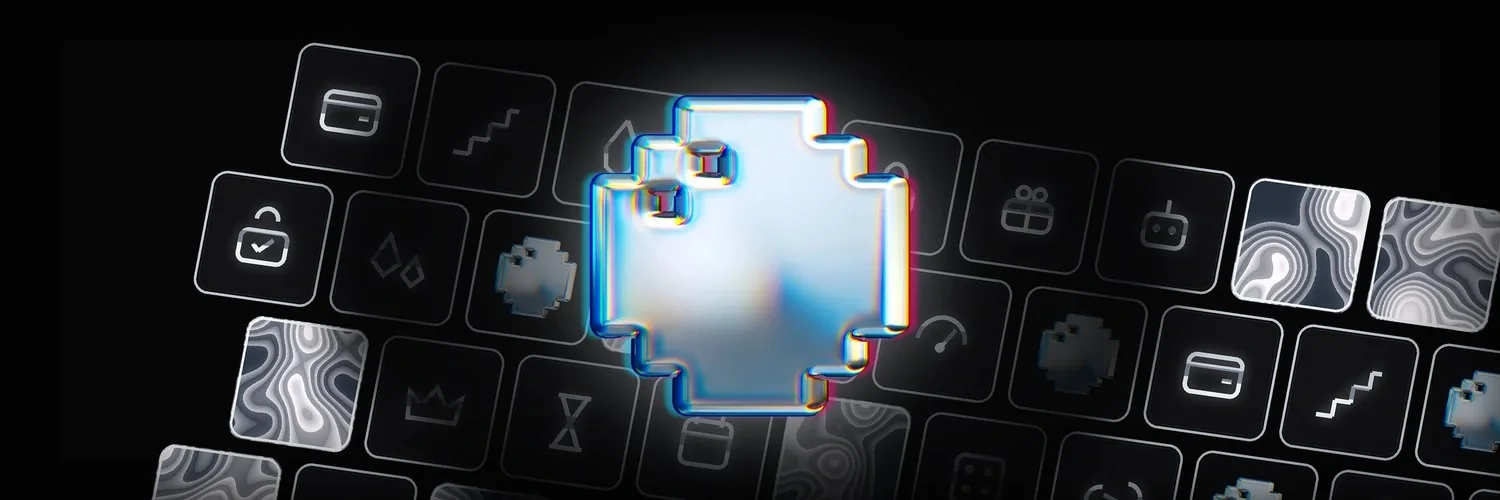
It is a telling introduction to a launchpad promising to place rules inside tokens. Its banner shows a metal emblem with pixel edges, surrounded by tiles depicting a padlock, a chart, a gift and a robot. The visual subject is a set of possibilities to assemble. Its name develops that idea: SPEC stands for Solana Programmable Extension Coins. The reported peak for its token reaches a $3.85 million market cap at 05:02 Paris time on October 4. [2] [3]
20:24: a contract, then an acknowledged starting point
At 20:24 on October 3, @specfun announces SPEC on Solana and publishes the address 2AVjqmGbMqg7rSyHVv2deVdggsBgBtu1Bi69BUvE5WRv. The post presents wallet limits, selling restrictions and market hours that creators can combine. DEX Screener connects this contract to spec.fun; its Meteora DBC pair appears at 20:24:27, followed by a DAMM v2 pair at 20:32:39. These markers locate the market studied here without confusing it with other assets using the SPEC ticker. All times in this article are Paris time. [1] [2]
At 20:33, jami, @jamiiRQ, publishes Why I built SPEC. He identifies himself as its builder and explicitly names Hooked as the first launchpad where he encountered this approach. He acknowledges its pioneering role, then explains what he wants to add: letting users write, publish and reuse their own rules. This lineage is claimed by jami; his comparison is not an independent test of the two platforms. [4]
Our reading is that SPEC wants to turn customization into a shared story. A creator chooses more than a name and an image: they imagine how their coin should be held, traded or circulated. That promise opens a conversation in which the rules themselves can become material for the meme.
What a rule inside a token means
The principle relies on an existing Solana feature. With Token-2022, a Transfer Hook extension can designate a program called during transfers. Solana’s documentation describes this interface independently of SPEC. The network technology should therefore be distinguished from the launchpad’s proposal to make it accessible. [5]
SPEC explains that its hook examines transfers and can reject them when they violate a token’s conditions. A wallet holding cap is the simplest example for a reader. The proposed benefit is that this check does not depend solely on a promise displayed on a website. According to the documentation, some curves remain permanent; others graduate into a conventional pool and lose their hook at that point. The same rules are consequently not presented as lasting forever in every case. [6] [18]
Inviting users to build what comes next
The site compares configuring a coin with configuring a car or a computer. Its catalog, configurator and AI tool offer several entry points. The documentation describes AI mapping a request onto catalog blocks and adjusting their parameters; the user must then review them. This means composing options, rather than proving that every freely expressed idea will be possible. [3] [8]
Published hooks are also presented as reusable templates carrying royalties for their authors. At 21:02, the account says no custom hook has yet been created and offers to cover creation costs for two days. At 02:24 the following morning, it reports 184 coins launched, more than 102,000 transactions, $10.7 million in volume and 36 launches using rules written by other people. These are SPEC’s claimed figures, without an independent audit in this article. [7] [9] [14]
The contrast between those posts conveys the launch’s ambition: attract the first contributions, then show them circulating. A living catalog is more interesting to follow than a fixed list. Readers still need to be able to identify what users are building and what actually works.
A community between enthusiasm and troubleshooting
Beneath jami’s article, Mainsqueeze, @Mainsqweez3, thanks the project at 21:28 and expresses frustration with developers he does not trust. Sheldon asks whether an NFT launch is planned. Lukesch requests an update because market caps are not displaying properly. These reactions give the audience several faces: someone seeking more credible rules, someone imagining an extension, and someone simply wanting to use the page. [4]
At 21:50, SPEC says it has fixed crashes under load, frozen market caps, failed purchases and fee claims. Yet three minutes later Ayze reports that holder rewards and the buyback mechanism are not working; YumsoGambles says recent trades are missing. We report these as user observations without generalizing them to every operation. The official response does not by itself bring troubleshooting to an end. [10]
Fees, agents and a changing promise
The economic link to SPEC is announced in the first thread: the account says all fees are used to buy and burn the token. The fees page, however, describes a 1% charge, with 85% allocated to buying and burning and 15% to development. These statements differ. Without clarification reconciling them, we do not treat the 100% allocation as a definitively established mechanism. [11] [12]
At 00:55 on October 4, the account announces an AI Agents option: a coin’s fees would fund an agent that trades, with profits distributed to holders. Exy praises the team’s preparation; shortly afterwards Mark replies that he cannot launch. At 02:59, SPEC also announces the ability to choose its token as the quote asset for a new pair. The offer expands while user experience remains uneven; neither the promised profits nor their consistency is established by these posts. [13] [15]
A catalog is not uniform proof
The Contracts page provides an important distinction. It labels several restrictions as enforced on-chain, including wallet caps, transaction limits and trading hours. For the rest of the catalog, it lists options recorded in the configuration sheet but not yet enforced. That table invites readers to check each feature rather than extend the promise to every tile on the site. [16]
The Safety page also states that the team retains the ability to upgrade the main hook program. A story about rules no website can interrupt therefore does not mean all trust in developers has disappeared. We can observe this disclosure in the documentation; the sources assembled here do not constitute an audit of the deployed code. [17]
$3.85 million, and a workshop still open
The market reference retained here is the ATH supplied to the editorial team: a $3.85 million market cap at 05:02 Paris time on October 4, 2026. Earlier posts document activity around the launch without measuring each contribution to the rise or independently confirming the peak to the minute.
SPEC already has an identifiable story: its acknowledged debt to Hooked, rules to assemble, users invited to contribute and an evening of public fixes. Its next chapter will be found in reused creations, the precision of its documentation and the resolution of reported problems. The polished metal emblem has found its first hands. They are not all asking for the same thing, but they give the project concrete questions to answer.
Sources
Sources consulted on 4 October 2026. Figures reflect the cited snapshots and are not updated live.
- SPEC — annonce du lancement et contrat exact, 3 octobre à 20 h 24 (Paris)
- DEX Screener — SPEC / SOL sur Meteora, adresse et visuels
- SPEC.fun — présentation et configurateur du launchpad
- jami — Why I built SPEC, 3 octobre à 20 h 33 (Paris), et réponses
- Solana Program — documentation de l’interface Transfer Hook
- SPEC.fun — fonctionnement du hook
- SPEC.fun — création de hooks et royalties
- SPEC.fun — rôle du concepteur IA
- SPEC — création offerte pendant deux jours et signalements, 21 h 02 (Paris)
- SPEC — corrections annoncées et retours des utilisateurs, 21 h 50 (Paris)
- SPEC — annonce initiale sur les rachats et destructions de tokens
- SPEC.fun — répartition des frais de la plateforme
- SPEC — annonce AI Agents et réponses, 4 octobre à 00 h 55 (Paris)
- SPEC — bilan des lancements, transactions et volume, 4 octobre à 02 h 24 (Paris)
- SPEC — possibilité annoncée de lancer une paire contre SPEC, 02 h 59 (Paris)
- SPEC.fun — programmes et tableau des règles appliquées
- SPEC.fun — autorité de mise à jour et dépendances
- SPEC.fun — courbes permanentes et graduation